

Data published April 9, 2026, by SNS Insider estimates the global longevity market will reach $67.03 billion by 2035, with growth tied to preventive care, personalized medicine, and wellness services commonly offered in Med Spa settings.
Longevity Market Forecast Reflects Shift Toward Preventive Health
The global longevity market is projected to grow at a 9.41% CAGR through 2035, according to data published April 9, 2026, by SNS Insider. The report identifies increased use of preventive healthcare, consumer-directed services, and technology-enabled health monitoring. For Med Spa operators, these developments reinforce that services categorized within longevity remain subject to existing requirements for patient evaluation, prescribing, and clinical oversight.
Market Data Highlights Growth Drivers, Segmentation, and Distribution Trends
The SNS Insider report estimates the global longevity market will increase from $27.61 billion in 2025 to $67.03 billion by 2035, representing a projected compound annual growth rate (CAGR) of 9.41% during the forecast period. The report attributes growth to the rising prevalence of age-related conditions, increased focus on healthspan extension, and expanded use of preventive healthcare and personalized medicine.
By application, preventive healthcare and wellness account for 30.25% of the market, representing the largest share among use cases. By end user, individual consumers account for 35.12% of the market, indicating direct participation in longevity-related products and services.
In product segmentation, nutraceuticals and dietary supplements hold the largest share at 28.05%, followed by anti-aging pharmaceuticals, regenerative medicine, hormone replacement therapy (HRT), and other therapeutic categories. Technology segmentation identifies genomics and epigenetics as the leading category, while biomarker and aging clock technologies are projected to grow at the fastest rate through 2035.
The report also notes the increasing adoption of artificial intelligence, wearable health-monitoring technologies, and digital health tools in longevity-related applications. In distribution, direct-to-consumer channels account for 32.23% of the market, with continued growth in online and digital platforms. Regionally, North America holds approximately 39.84% of the market, while Asia-Pacific is projected to experience the fastest growth over the forecast period.
Industry reporting from Longevity.Technology notes that preventive healthcare and wellness represent the largest application segment, consumers account for the largest share of end users, and technologies such as genomics, epigenetics, and biomarker-based tools are central to market growth.
Source Attribution
According to data published April 9, 2026, by SNS Insider, the global longevity market is projected to grow from $27.61 billion in 2025 to $67.03 billion by 2035. Industry reporting published April 13, 2026, by Longevity.Technology describes market segmentation, consumer participation, and technology adoption within the longevity sector.
Compliance Context: Service Delivery Models and Clinical Oversight
The projected growth of the longevity market reflects the delivery of preventive and personalized healthcare services within existing clinical frameworks. The SNS Insider data identifies increased use of preventive care, consumer-directed services, and technology-enabled health monitoring. These developments do not establish new regulatory categories.
Compliance considerations are defined by the underlying medical service rather than how the service is described or marketed within longevity or wellness models. Services associated with longevity, such as hormone-related therapies and regenerative medicine, remain subject to established requirements governing patient evaluation, prescribing authority, and clinical oversight. Wellness-based treatments are delivered under the same clinical standards.
Recent reporting illustrates how these services are structured across care settings. Gameday Men’s Health’s Expansion of clinics offering hormone and longevity services reflects how provider-led workflows, including dedicated medical intake, lab testing, and treatment initiation, operate within clinic-based models.
An Inspire360 Report from March 2026 outlines GLP-1 Fitness Program Models and how medical weight-loss services are incorporated into structured wellness programs. Planned Parenthood Mar Monte’s expansion in March 2026 also reflects the expansion of aesthetic and wellness services within clinical organizations.
These developments demonstrate variation in delivery models across clinical and wellness settings, including those used in Med Spa environments. Requirements related to provider involvement, patient assessment, and treatment authorization continue to apply based on the service’s clinical nature, regardless of whether it is positioned within longevity, wellness, or aesthetic care.
Practical Implications for Med Spa Operators
The following considerations reflect how longevity-related services intersect with existing clinical and regulatory requirements in Med Spa settings:
- Ensure longevity-related services comply with the requirements for patient evaluation and provider oversight, as applicable to the underlying medical service.
- Align direct-to-consumer models with prescribing, supervision, and documentation requirements as these channels expand.
- Ensure marketing reflects the clinical nature of longevity-related services and remains compliant with scope-of-practice requirements.
- Integrate digital health tools, biomarker tracking, and monitoring technologies within existing standards for clinical assessment and oversight.
- Structure consumer-directed service models within defined clinical workflows that support provider involvement and documentation.
- Classify longevity-related services by clinical function to ensure regulatory requirements apply appropriately, regardless of positioning.
What to Watch
The SNS Insider data published April 9, 2026, identifies continued growth in preventive healthcare, consumer participation, and technology-enabled monitoring. For Med Spa operators, this reflects how longevity-related services are being delivered within existing clinical and operational frameworks as consumer-directed and technology-enabled models expand. These developments may further shape how such services are integrated across clinical and wellness settings.
About Spakinect
Spakinect provides compliance infrastructure and telehealth-supported supervision solutions for medical aesthetic practices. For additional information, see our website.
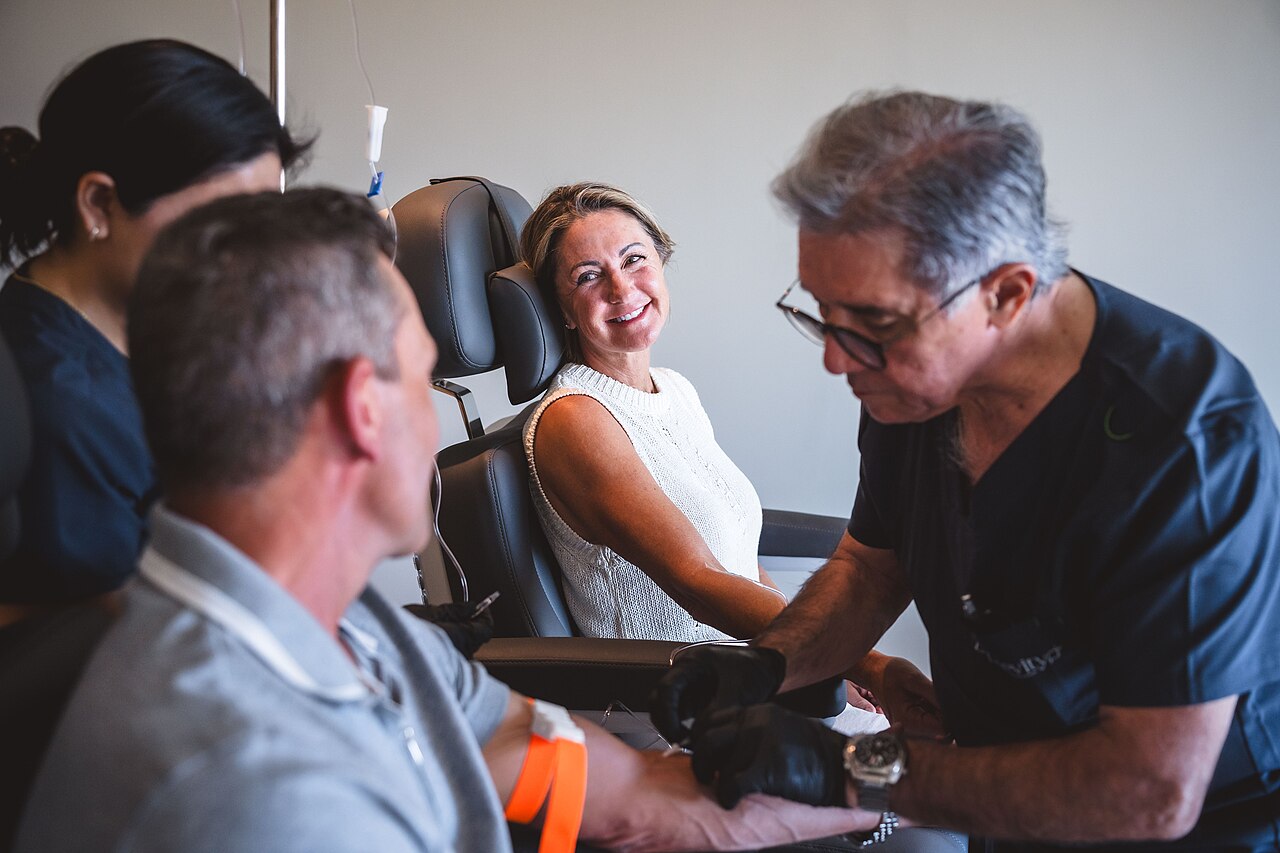
Image Attribution: “Longevity Medical Institute Stem Cell Patients” by Longevitymedical, via Wikimedia Commons, licensed under CC BY 4.0.