
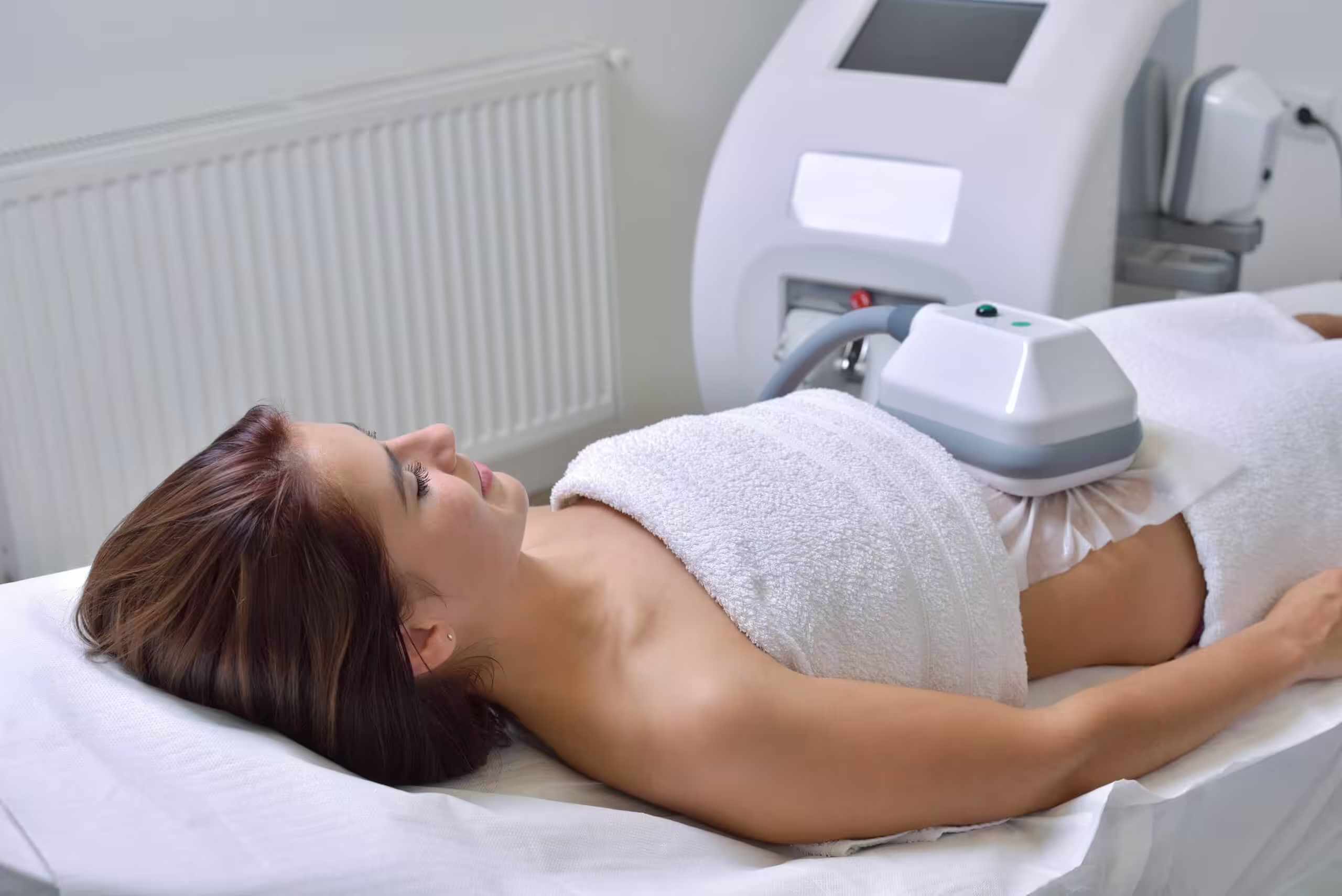
Body contouring treatments such as CoolSculpting are often positioned as non invasive and cosmetic. Because there are no needles, prescriptions, or injectables involved, Med Spas sometimes assume these services sit outside of Good Faith Exam requirements.
That assumption is where compliance risk begins.
Whether a Good Faith Exam is required for body contouring depends on how the treatment is regulated in your state, how it is delivered, and whether medical judgment is required to determine patient eligibility.
This article explains when a GFE is required for body contouring, why these treatments are not always exempt from medical oversight, and how Med Spas can stay compliant.
For foundational context, this topic builds on What is a Good Faith Exam? and Are GFE’s required for all med spa services, or only certain ones?
Why Body Contouring Is Not Always “Non Medical”
Body contouring treatments may be non surgical, but they still alter tissue through controlled medical devices. Treatments like cryolipolysis, radiofrequency, and ultrasound based fat reduction can carry risks when performed on the wrong patient.
From a regulatory perspective, the key question is not whether needles are used. The question is whether medical judgment is required to determine if the treatment is appropriate.
Medical oversight may be required when:
- The device is classified as medical
- The treatment affects deeper tissue
- Contraindications must be evaluated
- Patient health history impacts safety
This is why some states treat body contouring differently than basic aesthetic services.
When a GFE Is Required for Body Contouring Treatments
A Good Faith Exam is commonly required for body contouring when:
- State law classifies the treatment as medical
- A licensed provider must determine candidacy
- The treatment carries contraindications
- The device requires physician oversight
- The patient’s medical history impacts risk
In these cases, a GFE establishes medical authorization before treatment begins. Relying on intake forms or technician screening alone can create compliance exposure.
This requirement aligns with Why is a Good Faith Exam required in med spas?
When a GFE May Not Be Required
In some states, certain body contouring treatments may be performed without a Good Faith Exam when:
- The treatment is classified as cosmetic only
- No medical judgment is required
- The device is permitted under delegation rules
- There are no meaningful contraindications
Even in these cases, many Med Spas choose to perform GFEs as a risk management measure, particularly when offering multiple services or operating across state lines.
This decision often intersects with What happens if my state doesn’t clearly define GFE requirements?
Can One GFE Cover Body Contouring and Other Treatments?
Sometimes.
A single GFE may cover body contouring along with other services when:
- Body contouring was evaluated during the exam
- The provider documented medical clearance
- The treatments share relevant risk considerations
- The patient’s health status has not changed
If body contouring was not evaluated during the original exam, a new or updated GFE may be required before treatment begins.
This scenario ties directly to Does a GFE cover multiple treatments or only one?
Timing, Renewal, and Body Contouring Programs
Body contouring is often delivered as a series of sessions rather than a one time treatment. Over time, the original exam may no longer reflect the patient’s current health.
A new or updated GFE may be required when:
- The exam falls outside the renewal timeframe
- Significant time passes between sessions
- The patient reports health changes
- Additional body contouring areas are added
These considerations overlap with How often does a GFE need to be renewed? and What happens if a patient’s health changes between GFEs?
How State Laws Affect Body Contouring Compliance
Spakinect helps Med Spas navigate gray areas like body contouring by ensuring Good Faith Exams are available when required.
Patients connect with a licensed provider quickly. Exams are performed by licensed W-2 providers who receive extensive training. Providers evaluate patient history and document medical decision making appropriately.
With coverage in 40 states and counting, Spakinect supports both single location and multi location Med Spas offering a wide range of services.
How Spakinect Supports Body Contouring Compliance
State laws vary widely in how body contouring treatments are regulated. Some states clearly define these services as medical. Others leave interpretation to Medical Boards.
In audits, boards often evaluate whether it was reasonable for the Med Spa to rely on technician screening alone or whether a licensed provider should have evaluated the patient.
Understanding Do laws around GFEs differ by state? and What are the compliance laws in my state for a med spa? is critical for practices offering these services.
FAQs: Good Faith Exams and Body Contouring Treatments
Is a Good Faith Exam always required for body contouring treatments?
Not always, but often. Whether a GFE is required depends on how the treatment is regulated in your state and whether medical judgment is required to determine patient eligibility.
In many states, treatments like CoolSculpting require provider oversight due to contraindications and device classification. In others, the requirements may be less explicit. When in doubt, performing a GFE reduces risk.
This uncertainty is addressed in What happens if my state doesn’t clearly define GFE requirements?
Can a telemedicine GFE be used for body contouring?
In many states, yes. If a GFE is required, it may be performed via synchronous telemedicine when state law allows it.
The provider must interact live with the patient, review medical history, and document whether the patient is an appropriate candidate. Telemedicine does not remove the obligation to perform a proper exam.
This is explained further in Is the Good Faith Exam done in person or virtually?
Does one GFE cover multiple body contouring sessions?
Often, yes. A single GFE may cover a series of body contouring sessions if the exam remains within the renewal window and the patient’s health has not changed.
However, long gaps between sessions or health updates may require reassessment. This ties into How often does a GFE need to be renewed?
What patient conditions are commonly screened during a body contouring GFE?
Providers typically screen for conditions such as pregnancy, cold sensitivity disorders, implanted devices, skin integrity issues, and other contraindications relevant to the specific technology used.
This screening is part of what distinguishes a Good Faith Exam from a general consultation, as discussed in How is a GFE different from a regular medical exam?
How do state laws impact body contouring compliance?
State laws determine whether a provider must evaluate the patient, how delegation is handled, and whether a GFE is required at all.
Because enforcement varies, Med Spas should understand Do laws around GFEs differ by state? and What are the compliance laws in my state for a med spa?
Final Takeaway
Body contouring treatments may be non invasive, but they are not always non medical. In many states, Good Faith Exams are required to ensure patient safety and regulatory compliance.
Med Spas that treat body contouring casually risk audits, penalties, and operational disruption. Clear medical oversight and documentation protect both patients and the business.