
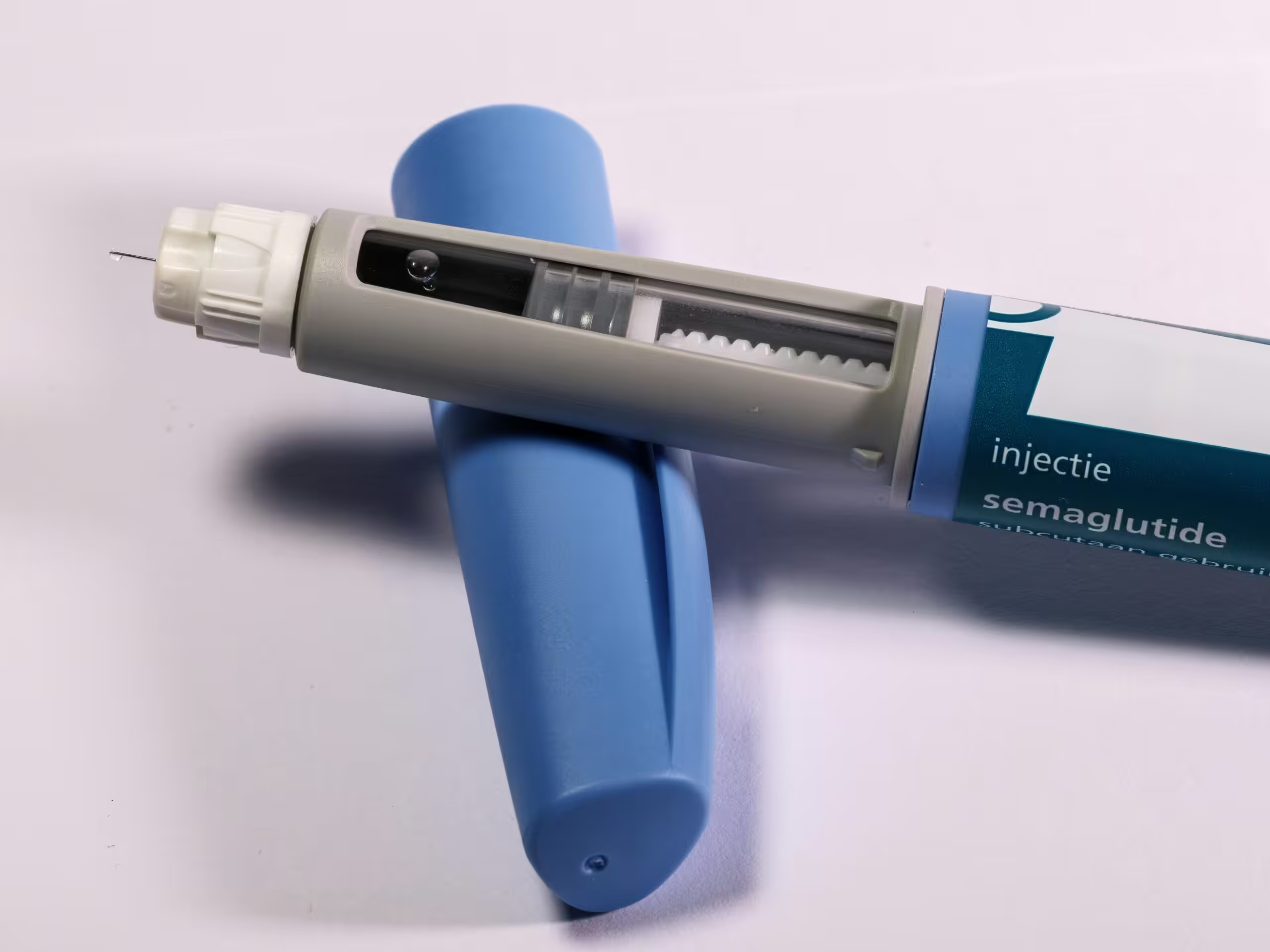
Medical weight loss not only blends seamlessly into Med Spa environments, it’s a highly requested treatment by patients. GLP-1 medications and other prescription based weight loss therapies are now common offerings, often alongside injectables, IV therapy, and body contouring services.
Because these treatments involve prescribing and ongoing medical oversight, they raise one of the most important compliance questions a Med Spa can ask.
Do weight loss treatments require a Good Faith Exam?
Yes. And the reasons go far beyond paperwork.
This article explains when a GFE is required for weight loss services, why these exams are scrutinized more closely than many aesthetic treatments, and how Med Spas can stay compliant while offering these programs.
For foundational context, this topic builds directly on What is a Good Faith Exam? and Why is a Good Faith Exam required in med spas?
Why Weight Loss Treatments Are Treated Differently
Weight loss treatments like GLP-1s are not cosmetic procedures. They involve prescription medications that affect metabolism, appetite regulation, and systemic physiology.
From a regulatory perspective, these services fall clearly under the practice of medicine. That distinction carries higher expectations for medical evaluation, documentation, and follow up.
Unlike many aesthetic services, weight loss programs typically require:
- A prescription issued by a licensed provider
- Ongoing monitoring over time
- Adjustments based on patient response and side effects
Because of this, regulators expect a Good Faith Exam to establish a provider patient relationship and confirm that the patient is an appropriate candidate before treatment begins.
This expectation aligns closely with Are GFE’s required for all med spa services, or only certain ones?
When a GFE Is Required for GLP-1 and Weight Loss Programs
A Good Faith Exam is required before initiating weight loss treatment when:
- A prescription medication is being prescribed
- The provider must assess medical contraindications
- Ongoing medical monitoring is expected
- Treatment decisions depend on the patient’s health history
In practical terms, this means a GFE must be completed before the first prescription is issued. Intake forms alone are not sufficient. Standing orders without individualized evaluation are frequently flagged in audits.
This requirement is also tied to Who can perform a Good Faith exam?, as only licensed providers with appropriate scope may conduct the exam and prescribe medication.
Can an Existing GFE Cover Weight Loss Treatments?
Sometimes, but not always.
An existing GFE may cover weight loss treatment only if:
- The exam included a full medical history review relevant to prescribing
- The provider evaluated contraindications specific to weight loss medications
- The treatment was contemplated and documented during the exam
- The exam is still within the renewal window
- The patient’s health history has not changed
In many cases, GFEs completed for aesthetic treatments do not meet these criteria. Weight loss programs often require a new or expanded exam due to the systemic effects of the medications.
This distinction is closely related to Is a GFE required before every new type of treatment?
Ongoing Monitoring and GFE Renewal for Weight Loss Programs
Weight loss treatments are not one time services. Patients are typically seen over weeks or months, with dosage adjustments and monitoring for side effects.
A new or updated GFE may be required when:
- The patient experiences side effects
- Medications or dosages change significantly
- New diagnoses or medications arise
- The original exam is outside the renewal timeframe
This is why weight loss services frequently intersect with How often does a GFE need to be renewed? and What happens if a patient’s health changes between GFEs?
Telemedicine and Weight Loss GFEs
In many states, Good Faith Exams for weight loss treatments may be performed via synchronous or asynchronous telemedicine when allowed by law.
The provider must:
- Interact live with the patient
- Review comprehensive medical history
- Assess contraindications and risk
- Document medical decision making
Asynchronous questionnaires or protocol based approvals without live interaction are often insufficient, particularly for prescribing.
This distinction is addressed further in Is the Good Faith Exam done in person or virtually? and Can I do async, or does my state require sync?
How Spakinect Supports Weight Loss Program Compliance
Spakinect supports Med Spas offering weight loss treatments by ensuring Good Faith Exams are performed correctly and consistently.
Patients connect with a licensed provider quickly. Exams are conducted by licensed W-2 providers who receive extensive training. Providers evaluate medical history, assess prescribing risk, and document clearance appropriately.
With coverage in 40 states and counting, Spakinect supports both single location and multi location Med Spas offering prescription based services.
FAQs: Good Faith Exams and Weight Loss Treatments
Is a Good Faith Exam always required before prescribing GLP-1 medications?
In most states, yes. Because GLP-1s are prescription medications with systemic effects, regulators expect a licensed provider to evaluate the patient before prescribing.
The exam establishes the provider patient relationship, confirms medical appropriateness, and documents clinical decision making. Without this exam, prescribing can be viewed as non compliant medical practice.
This requirement reinforces Why is a Good Faith Exam required in med spas?
Can a telemedicine GFE be used for weight loss programs?
In many states, a telemedicine Good Faith Exam may be used, provided it is conducted synchronously and complies with state telehealth laws.
The provider must interact live with the patient, review medical history, and document risk assessment. Telemedicine does not reduce the obligation to perform a thorough exam.
This distinction is explained further in Is the Good Faith Exam done in person or virtually?
How often does a GFE need to be repeated for weight loss treatment?
There is no universal timeline. A GFE may remain valid within the state’s renewal window as long as the patient’s health and treatment plan remain unchanged.
However, weight loss programs often involve medication adjustments and ongoing monitoring, which increases the likelihood that an updated exam will be required over time.
This is closely tied to How often do I need to update or repeat a GFE?
What happens if a patient’s health changes during a weight loss program?
If a patient’s health changes in a way that could affect treatment safety, a new or updated GFE is typically required before continuing or modifying treatment.
Examples include new diagnoses, new medications, or adverse reactions. Continuing treatment without reassessment can invalidate the original exam.
This scenario is addressed directly in What happens if a patient’s health changes between GFEs?
Are weight loss GFEs more heavily scrutinized than aesthetic treatments?
Often, yes. Because weight loss treatments involve prescribing and systemic effects, Medical Boards tend to scrutinize these programs more closely than purely aesthetic services.
Clear documentation, appropriate exams, and timely reassessment are essential for reducing regulatory risk.
This reinforces the importance of understanding Are GFE’s required for all med spa services, or only certain ones?
Final Takeaway
Weight loss treatments sit firmly in the medical category of Med Spa services. Because they involve prescribing and ongoing oversight, a Good Faith Exam is almost always required.
Med Spas that treat weight loss like a cosmetic add on rather than a medical program face elevated compliance risk. Performing thorough exams and reassessing when needed protects patients, providers, and the business.