

An executive order temporarily extends pandemic-era practice flexibilities for healthcare providers in New Jersey, delaying the return to pre-emergency supervision and documentation requirements until April 2, 2026. The extension affects oversight protocols and scope-of-practice compliance for Med Spa operators.
New Jersey Extends Emergency Flexibilities for Medical Aesthetic Providers
On January 16, the Office of the Governor of New Jersey announced that pandemic-era practice flexibilities would expire within 30 days, requiring medical aesthetic providers to return to pre-emergency statutory requirements. However, on February 13, Governor Sherrill issued an executive order extending the state’s emergency declaration through April 2, 2026, continuing temporary modifications to advanced practice nurse collaboration requirements and supervision protocols that were originally scheduled to resume under pre-emergency law.
Emergency Extension and Compliance Timeline Overview
The January 16th announcement followed the state’s original plan to conclude the long-standing COVID-19 emergency declarations, which had temporarily modified healthcare practice standards, such as collaborative requirements for advanced practice nurses (APNs). Under existing New Jersey Law, APNs must maintain a joint protocol agreement with collaborating physicians, along with documented requirements for supervised structures, especially regarding prescribing parameters.

On February 13th, Governor Mikie Sherrill signed an executive order extending the State of Emergency through April 2, 2026, to preserve the flexibilities affecting APN collaborations. The extension does not create new practice authority but delays the statutory enforcement of the requirement that APNs must be supervised and the collaboration agreements they need with physicians.
The order applies statewide and affects healthcare providers operating under emergency-authorized modifications. This includes medical aesthetic practices structured around APN-led injectables, IV therapy, and device-based services such as laser resurfacing, radiofrequency microneedling, and ultrasound skin tightening.
Once the extension expires, pre-emergency statutory requirements resume. New Jersey Med Spa nurse practitioners and operators can anticipate regular compliance and maintenance of written joint protocol agreements, documented physician collaboration, DEA registrations and controlled-substance joint protocols, a clear ownership structure, and provider authority.
Governor’s Press Release and Public Source
According to a February 13, 2026, press release from the Office of the Governor of New Jersey, Governor Mikie Sherrill signed an executive order extending the State of Emergency through April 2, 2026. The emergency extension does not change the underlying statutory framework — it only delays full reactivation of these requirements until the emergency declaration concludes.
A Focus on Regulatory Alignment and Practice Model Risk Exposure
New Jersey’s approach to this regulatory change suggests restoring the supervision and collaboration frameworks that were temporarily adjusted to expand medical provisions during the COVID-19 pandemic. With the emergency order expected to end in April, state regulators have increasingly emphasized a formal provider relationship. As emergency declarations wind down nationwide, state regulators are reinstating pre-pandemic supervision and collaboration requirements.
This is relevant when the prescribing authority and independent clinical decision-making processes intersect. The need for collaboration agreements between an advanced practice nurse and physicians remains a focal point of state regulations due to the legal scope of practice, prescribing limits, and supervisory accountability.
In terms of risk exposure, operators most affected are likely to include multi-location aesthetic practices structured around APN-led injectables or IV therapy models. Practices that modified collaboration workflows during the emergency period or that operate under remote supervisory arrangements may experience increased scrutiny as statutory enforcement standards are reinstated.
Med Spa Practice Models: Reviewing Operational Implications
- Review joint protocol agreements: Confirm written collaboration terms, prescribing parameters, and physician relationships reflecting pre-emergency legal requirements.
- Evaluate APN-led services and structures: Across all locations, ensure supervision models, delegation, workflows, and documentation reflect the standards in New Jersey law.
- Reassess remote supervision arrangements: Determine whether collaborative oversight and chart review practices reflect reinstated enforcement protocols.
- Audit prescribing authority documentation: Track processes for injectable medications, weight loss treatments, and IV services to confirm alignment with providers and collaboration agreements.
- Confirm and maintain the business entity structure and ownership: Ensure that business formation, provider roles, and operational authority accurately align with documented oversight expectations.
Ongoing Regulatory Monitoring for New Jersey Med Spas
With the emergency declaration now extended through April 2, 2026, attention is actively shifting to whether additional extensions will be issued or whether state protocols will proceed with full reinstatement of statutory requirements. Med Spa operators can monitor official executive orders to watch for updates that could affect enforcement timelines.
About Spakinect
Spakinect provides compliance infrastructure and telehealth-supported supervision solutions for medical aesthetic practices. For additional information, see our main page.
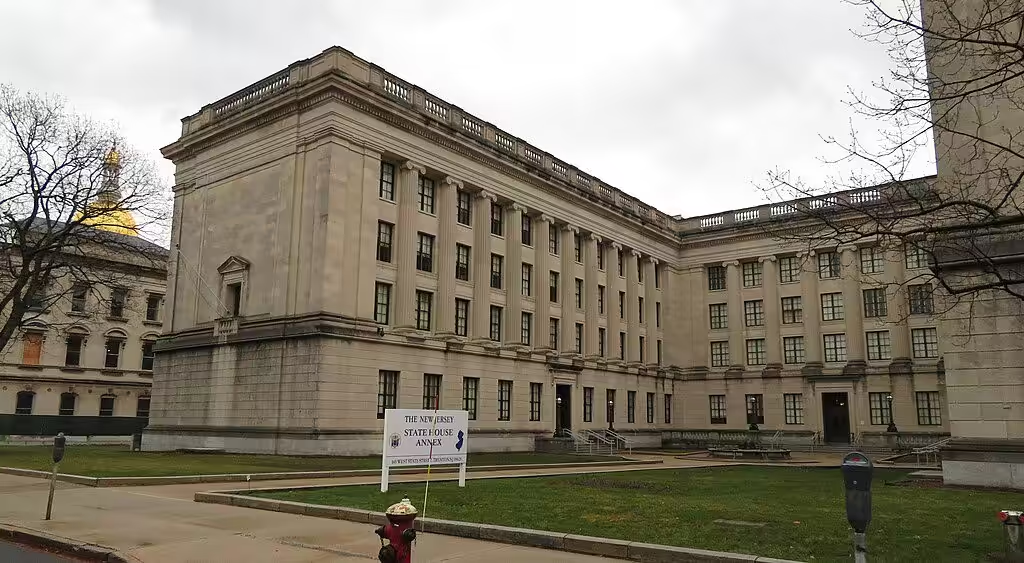
Image Attribution: “New Jersey State House Annex, Trenton, New Jersey” by Ken Lund, via Wikimedia Commons, licensed under CC BY-SA 2.0.