
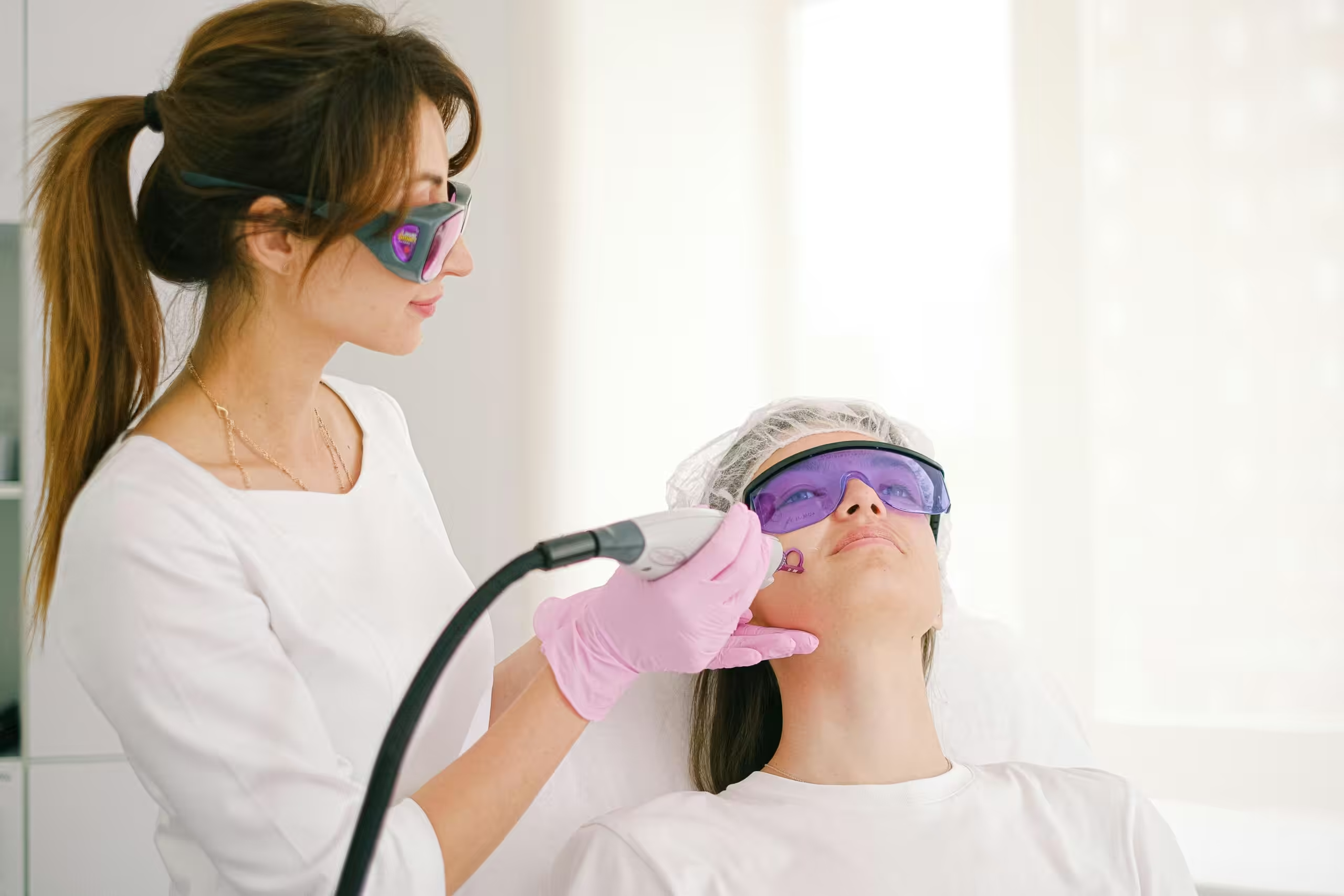
Laser treatments often sit in a gray zone for Med Spas. They are not injectable, they do not involve a prescription drug in every case, and they are sometimes marketed as purely aesthetic. That combination leads many practices to ask whether a Good Faith Exam is actually required before laser services.
In many cases, the answer is yes.
Whether a Good Faith Exam is required for laser treatments depends on the type of laser, the depth of tissue interaction, and how your state defines the practice of medicine. Understanding that distinction is critical for staying compliant without overcorrecting.
If you need a baseline understanding of the exam itself, it helps to start with a clear explanation of what a Good Faith Exam is and why it exists in the Med Spa environment.
Why Laser Treatments Can Trigger Good Faith Exam Requirements
Not all lasers are treated equally under state law. Low level aesthetic devices may fall outside medical regulation, while higher powered lasers that penetrate the skin or alter tissue are often classified as medical devices.
When a laser treatment is considered medical in nature, state Medical Boards generally require a licensed provider to evaluate the patient before treatment. That evaluation is formalized through a Good Faith Exam.
This is why Good Faith Exams are required in Med Spas more broadly, even when a treatment does not involve an injection. The determining factor is medical risk, not whether a needle is used.
Are Good Faith Exams Required for All Laser Treatments?
No. Some superficial laser and light based services may not require a Good Faith Exam, depending on state law and device classification. However, many commonly offered laser treatments do fall under medical oversight requirements.
Examples that often require a Good Faith Exam include:
- Laser hair removal using medical grade devices
- Fractional resurfacing
- Vascular and pigmented lesion treatments
- Ablative or semi ablative laser procedures
Because enforcement varies by jurisdiction, Med Spas cannot rely on assumptions or device marketing alone. Understanding whether a GFE is required for every patient or only certain services is essential when building laser treatment menus.
How State Laws Affect Laser Compliance
States differ widely in how they regulate lasers. Some explicitly define which laser classes require medical oversight. Others rely on general medical practice acts and board guidance.
In states with stricter oversight, failure to perform a Good Faith Exam before medical grade laser treatments can result in board investigations, fines, or loss of delegation authority. Even in states with less explicit language, enforcement patterns often mirror those stricter standards.
This is why Med Spas operating across locations must understand how GFE laws differ by state and cannot assume uniform rules.
Who Can Perform the Good Faith Exam for Laser Treatments?
When a laser treatment requires a Good Faith Exam, the exam must be performed by a licensed provider with appropriate scope of practice. This generally includes physicians, nurse practitioners, and physician assistants, subject to state supervision rules.
While laser treatments are often administered by RNs or trained technicians, those individuals cannot perform the medical evaluation itself. Improper delegation is a frequent compliance issue, especially when a Medical Director is not actively involved.
Understanding who can perform a Good Faith Exam and how delegation can put a license at risk is particularly important for laser heavy Med Spas.
Can a Virtual Good Faith Exam Be Used for Laser Treatments?
In many states, yes. A Good Faith Exam conducted via synchronous telehealth may be acceptable for laser treatments when it meets state telemedicine requirements and the provider can adequately assess risk.
The exam must include live interaction, review of medical history, and documentation of medical decision making. As with injectables, asynchronous exams may not be sufficient in states that require real time evaluation.
For Med Spas using virtual workflows, knowing whether your state requires synchronous encounters is critical for laser compliance.
What a Laser Good Faith Exam Should Evaluate
A Good Faith Exam for laser treatments focuses on patient safety rather than cosmetic goals alone.
Common areas evaluated include:
- Skin type and risk of hyperpigmentation or scarring
- Medical history that affects healing or photosensitivity
- Medications that increase laser risk
- Prior adverse reactions to light based treatments
The provider determines whether the patient is an appropriate candidate and documents that decision before treatment begins. This documentation is what protects the practice if questions arise later.
For guidance on what records must be kept, understanding what documentation proves a Good Faith Exam was completed is essential.
Do Follow Up Laser Sessions Require Another Good Faith Exam?
Not always. A single Good Faith Exam may cover multiple laser sessions if the exam is still valid and the patient’s health status has not changed.
However, a new exam may be required if:
- The prior exam is outside the renewal window
- The patient begins a new medication
- There is a change in health that affects laser safety
- A different type of laser treatment is introduced
This is closely tied to how often a Good Faith Exam needs to be renewed and what constitutes a material change in a patient’s health history.
What Happens If a Laser Is Used Without a Required Good Faith Exam?
When laser treatments are performed without a required Good Faith Exam, the risk is not theoretical.
Enforcement actions often begin with patient complaints related to burns, pigmentation changes, or scarring. Investigators then request documentation showing that a licensed provider evaluated the patient before treatment.
If no exam exists, boards may view the treatment as unauthorized medical practice. This can lead to fines, Medical Director scrutiny, and increased liability exposure. Understanding what happens if a GFE is not performed helps Med Spas avoid these outcomes.
How Spakinect Supports Laser Treatment Compliance
Spakinect helps Med Spas navigate laser compliance by ensuring that required Good Faith Exams are completed correctly and efficiently.
Patients connect with a licensed provider in an average of 31 seconds. Exams are performed by licensed W-2 providers who receive over 40 hours of dedicated training. Processes are Medical Board vetted, and documentation is securely stored and integrated with most EMRs.
With coverage in 40 states and counting, Spakinect supports both single location and multi location Med Spas offering laser services across jurisdictions.
FAQs: Laser Treatments and Good Faith Exams
Which laser treatments specifically require a Good Faith Exam?
Laser treatments that are considered medical in nature typically require a Good Faith Exam before treatment. These usually include medical grade lasers that penetrate the skin, alter tissue, or carry higher risk profiles. Common examples are fractional resurfacing, ablative and semi ablative lasers, vascular and pigmented lesion treatments, and certain medical grade laser hair removal devices.
Whether a specific laser requires an exam depends on how the device is classified and how your state defines the practice of medicine. This is why Med Spas often review whether a GFE is required for every patient or only for certain services and how GFE requirements differ by state.
Can a Good Faith Exam for laser therapy be done virtually?
In many states, yes. A Good Faith Exam for laser therapy may be completed virtually through synchronous telehealth when state telemedicine rules allow it and the provider can adequately assess patient risk.
The exam must involve live interaction between the patient and a licensed provider, along with a documented review of medical history, medications, and contraindications relevant to laser safety. Asynchronous exams may not be permitted in states that require real time evaluation.
For more clarity on this distinction, see whether the Good Faith Exam is done in person or virtually and whether your state requires synchronous encounters.
Who can legally perform a Good Faith Exam in my state?
In most states, a Good Faith Exam for laser treatments must be performed by a licensed provider with appropriate scope of practice. This generally includes physicians, nurse practitioners, and physician assistants, subject to state supervision and collaboration requirements.
Registered Nurses, technicians, and estheticians cannot perform the exam itself, even if they are permitted to operate laser devices under delegation. Because scope of practice varies, understanding who is legally allowed to perform a Good Faith Exam in your state is critical.
How recent must a Good Faith Exam be to cover multiple sessions?
A single Good Faith Exam may cover multiple laser sessions if the exam remains valid under your state’s renewal rules and the patient’s health status has not changed.
A new or updated exam is typically required when the original exam falls outside the renewal window, when a new type of laser treatment is introduced, or when the patient experiences a change in health that affects laser safety. This ties closely to how often a GFE needs to be renewed and what happens if a patient’s health changes between exams.
What questions are included in a GFE for laser resurfacing?
A Good Faith Exam for laser resurfacing focuses on medical safety rather than cosmetic goals alone. Providers typically review the patient’s medical history, medications, skin type, healing history, and conditions that increase risk of burns, scarring, or pigmentation changes.
The provider also evaluates prior reactions to laser or light based treatments and determines whether the patient is an appropriate candidate. This medical evaluation is what differentiates a Good Faith Exam from a general consultation and is why documentation is required.
For a broader overview, see what a Good Faith Exam is and how it differs from a regular medical exam.
Final Takeaway
Laser treatments may not involve injectables, but many still require medical oversight. When a laser procedure is considered medical in nature, a Good Faith Exam is often required to ensure patient safety and regulatory compliance.
Understanding when that exam is needed and ensuring it is properly documented protects your Med Spa, your providers, and your patients.
With the right systems in place, laser compliance does not have to slow operations. It strengthens trust and reduces risk.