


During a February 27, 2026, appearance on The Joe Rogan Experience (#2461), HHS Secretary Robert F. Kennedy Jr. said the FDA may take “some kind of new action” involving 14 peptides currently listed in Category 2. The remarks were made during a podcast interview, and as of publication, no formal FDA rule change has occurred; existing compounding regulations remain in effect.
What RFK Jr. Said About Category 2 Peptide Restrictions
United States Secretary of Health and Human Services, Robert F. Kennedy, said the Food and Drug Administration is reviewing prior Category 2 designations that bar compounding pharmacies from formulating certain peptides. During a February 27, 2026, episode of The Joe Rogan Experience (#2461), Kennedy said 19 peptides were moved to the restricted list and characterized the prior designation as inconsistent with existing FDA procedures, stating the agency lacked a required “safety signal.” He added that the FDA is preparing “some kind of new action” involving about 14 of those peptides.
Background on FDA Category 2 Peptide Restrictions and Kennedy’s Interview
In 2023, the U.S. Food and Drug Administration (FDA) moved 19 peptide substances into Category 2 of its 503A Bulk Drug Substances list. Category 2 on this list identifies ingredients that raise significant safety or regulatory concerns and are ineligible for compounding, according to the FDA. The peptides that were moved into Category 2 limit 503A compounding pharmacies’ ability to legally formulate these ingredients for patient-specific prescriptions under Section 503A of the Federal Food, Drug, and Cosmetic Act.
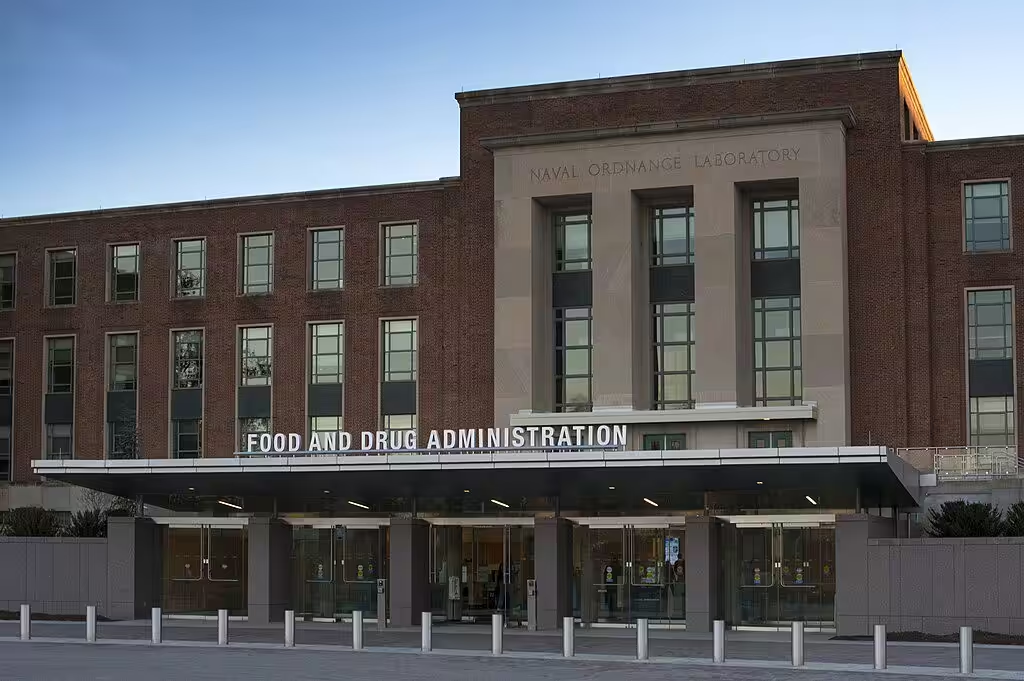
Compounding pharmacies may only formulate bulk drug substances that meet statutory requirements, and Category 2 places restrictions on substances such as BPC-157, thymosin beta-4 (TB-500), AOD-9604, and CJC-1295. HHS Secretary Kennedy, during a February 27, 2026, episode of The Joe Rogan Experience (#2461), said the 2023 designations did not meet what he described as the FDA’s procedural standard and stated that the FDA is “not supposed to do that unless there is a safety signal.” He added that the FDA is in the middle of preparing “some kind of new action” and that some peptides are in litigation, but Kennedy shared that “about 14 of them” may be made more accessible again.
For Med Spas, Category 2 status affects whether peptide ingredients can be sourced from licensed 503A compounding pharmacies operating under federal law. Restrictions on pharmacies alter availability through a regulated supply chain. As of this publication, the FDA has not issued any notice or Federal Register update about revisions to the Category 2 list.
Interview Record: RFK Jr. on The Joe Rogan Experience
According to a February 27, 2026, episode of The Joe Rogan Experience (#2461), Kennedy described the peptides as having been “illegally moved” to Category 2 (1:32:45) and stated the FDA is “not supposed to do that unless there’s a safety signal” (1:32:58). He later said the agency is preparing “some kind of new action” (1:34:29) involving “about 14” of the peptides (1:34:20).
How Peptide Oversight Fits Into Enforcement Trends
Oversight of compounded injectable therapies falls under the FDA, specifically through the Center for Drug Evaluation and Research (CDER), which administers Section 503A of the Federal Food, Drug, and Cosmetic Act. Once a substance is placed in Category 2, FDA restrictions on certain peptides affect whether those substances can be sourced from licensed 503A pharmacies operating under federal inspection standards. Clinics that rely on compounded injectables must align treatment offerings with pharmacy eligibility rules.
The FDA has issued guidance and enforcement communications related to supply chain transparency, ingredient eligibility, and documentation for use of compounded products. GLP-1 medications and weight-loss therapies have enforcement focused on prescriber evaluations, documentation, and the lawful sourcing of ingredients. Med Spa operations that offer peptide-based protocols require compliance considerations extending beyond ingredient access.
Practical Implications for Med Spas Using Compounded Peptides
- Verify that any peptide ingredient used in treatment protocols is eligible for compounding under current FDA bulk substance guidance.
- Review prescriber documentation to ensure the patient evaluations and medical necessity are identified and recorded accurately.
- Confirm that all compounding pharmacies used are supplying properly licensed and adherent injectable products according to Section 503A requirements.
- Align all of your marketing language to reflect prescriber authority and avoid using unsupported therapeutic claims.
- Assess delegation agreements and supervision structures for all practice providers to ensure compliance with the scope of practice.
Next Regulatory Developments to Monitor
Existing FDA regulations for Section 503A requirements remain in effect. Further developments will depend on formal FDA action.
About Spakinect
Spakinect provides compliance infrastructure and telehealth-supported supervision solutions for medical aesthetic practices. For additional information, see our main page.
Final statements
This article reports on statements made by HHS Secretary Robert F. Kennedy Jr., regarding potential FDA action. The remarks were made during a publicly available interview on The Joe Rogan Experience (#2461) and do not include a formal regulatory announcement. As of publication, no such action has been issued. Existing Section 503A compounding requirements and FDA bulk substance classifications remain in effect.
Image Attribution: “FDA Entrance” by The U.S. Food and Drug Administration, via Wikimedia Commons, public domain.