


The FDA’s June 2026 letters cite claims involving compounded semaglutide and tirzepatide, including claims of equivalence to approved drugs and the use of “FDA-approved” sourcing language in weight-loss marketing.
Warning Letters Address Telehealth GLP-1 Advertising Claims
On June 16, 2026, the U.S. Food and Drug Administration (FDA) posted 25 warning letters issued on June 8th to telehealth and weight-loss companies for advertising claims involving compounded GLP-1 drugs, including semaglutide and tirzepatide products. GLP-1 weight-loss services may be offered in some Med Spa settings, and the letters are relevant to clinics reviewing how compounded products are described on websites, service pages, intake forms, and paid ads.
FDA Identifies False or Misleading Compounded GLP-1 Claims Across Telehealth Companies
In the June 8 letters, the FDA connected the alleged violations to how companies described compounded GLP-1 drugs on their websites, including active-ingredient statements, brand-name comparisons, product-source language, and pharmacy approval status. The letters stated that the representations caused the products to be misbranded under sections 502(a) and 502(bb) of the Federal Food, Drug, and Cosmetic Act.
Examples cited by the Center for Drug Evaluation and Research (CDER) in the June 2026 letters include:
- Glow Medispa: The letter said compounded semaglutide and tirzepatide products displayed on Mint Med’s website identified “Mint Med” on pictured labels, which the FDA said suggested Mint Med was the compounder when it was not.
- Altru Telehealth: The letter pointed to “FDA approved active ingredient,” “same results,” and “FDA approved” compounding-pharmacy claims. It also identified website language stating that a compounded semaglutide included a “body safe vitamin such as B12.”
- Ready Med: The letter identified product images showing “Ready Med” or “Ready Med Medical Weight Loss Center” on the pictured labels. It also cited claims that compounded products used the “same active ingredient” as Mounjaro, Zepbound, Ozempic, and Rybelsus.
- Momentum Health: FDA pointed to product images showing “Momentum Health” on pictured labels, along with claims comparing compounded semaglutide and tirzepatide to Ozempic, Wegovy, Mounjaro, and Zepbound. The agency said the claims created a misleading impression about the products’ approval status and source.
The June warning letters follow the FDA’s March 2026 letters involving 30 telehealth firms over promotional claims for compounded GLP-1 drugs. The FDA also reminded recipients that federal requirements apply to how compounded drugs are promoted, a point relevant to Med Spas and clinics that market GLP-1 weight-loss services online.
Source: FDA Warning Letters
According to the FDA’s warning-letter index, the June 16, 2026, postings included 25 June 8 letters issued by the Center for Drug Evaluation and Research under the subject “False & Misleading Claims/Misbranded (Telehealth).”
Compounded GLP-1 Marketing Language and Med Spa Compliance
In the warning letters, the FDA focused on whether certain claims made compounded semaglutide and tirzepatide products appear FDA-approved, equivalent to approved brand-name drugs, or linked to “FDA-approved” pharmacies or facilities. Under the FD&C Act sections 502(a) and 502(bb), the FDA stated that false or misleading labeling, advertising, or promotion may cause a compounded drug product to be misbranded.
The letters gave recipients 15 business days to respond, including by identifying the entities that produce the compounded drugs offered on their websites, providing representative labeling samples, and addressing false or misleading website claims.
The letters addressed companies and claim examples involving:
- Telehealth and weight-loss companies that advertise compounded semaglutide or tirzepatide directly to patients.
- Businesses that compare compounded products with Ozempic, Wegovy, Mounjaro, Zepbound, or other brand-name drugs.
- Company websites, service pages, product images, and online intake language describing compounded GLP-1 products.
- Product-source statements or pictured labels that the FDA said could suggest the company was the compounder when it was not.
State-level GLP-1 advertising and prescribing issues have also appeared outside FDA warning letters. In Connecticut, Attorney General William Tong announced a May 2026 settlement involving Radiance Medspa of Avon and non-FDA-approved compounded semaglutide and/or tirzepatide weight-loss injections. The announcement also described a separate settlement involving online “research grade” GLP-1 sales to U.S. consumers.
In Med Spa operations that combine telehealth, GLP-1, and online advertising, the FDA letters highlight how compounded-product claims may be evaluated when patient-facing language discusses approval status, product source, or brand-name comparisons.
Operational Takeaways for Med Spa GLP-1 Sourcing and Marketing
- Review telehealth intake language when telehealth is part of the GLP-1 service model.
- Maintain records that show product sources, representative labeling, prescribing workflows, and patient-facing descriptions.
- Use clear language, distinguishing compounded GLP-1 products from FDA-approved branded medications.
- Confirm that compounded product sourcing aligns with applicable FD&C Act section 503A or 503B conditions when compounded drugs are sourced, used, or promoted.
- Align GLP-1 service pages, paid ads, and intake forms with documented product-source information.
What to Watch Next for Telehealth GLP-1 Marketing
Companies that received the June 2026 warning letters were asked to respond to the FDA within 15 business days. Further FDA action or guidance may provide additional context regarding compounded GLP-1 marketing, FD&C Act enforcement, telehealth weight-loss models, and Med Spa operations offering GLP-1 services.
About Spakinect
Spakinect provides compliance infrastructure and telehealth-supported supervision solutions for medical aesthetic practices. For additional information, see our website.
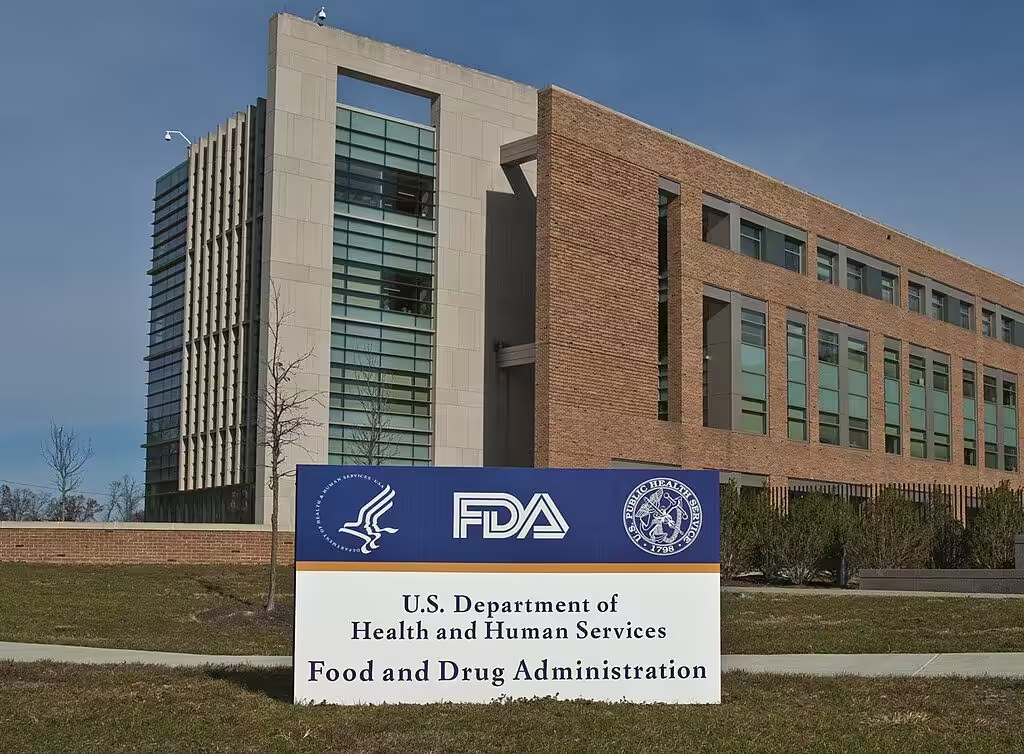
Image Attribution: “FDA Sign & Bldg 21 at Entrance” by The U.S. Food and Drug Administration, via Wikimedia Commons, public domain.