

Federal prosecutors charged two Indian nationals in Florida over an alleged scheme involving counterfeit Ozempic sourced from China and sold to U.S. distributors, with falsified packaging, labeling, and needles designed to resemble authentic products.
Federal Charges Follow Alleged Counterfeit Ozempic Distribution Scheme
On September 29, 2026, the U.S. Department of Justice announced federal charges against Swapnadip Roy and Vicky Ramancha in an alleged counterfeit Ozempic distribution scheme. The announcement followed Roy’s extradition from Italy and initial appearance in Tampa, Florida. For Med Spas and weight-loss clinics offering GLP-1 treatments, the case raises compliance considerations involving prescription drug sourcing, supplier authorization, and product labeling.
Federal Indictment Details Counterfeit Ozempic Sales and Smuggling Allegations
The federal indictment against Roy and Ramancha was unsealed on June 9, 2026, in the Middle District of Florida. In the September 29 announcement, the U.S. Department of Justice reported allegations that the defendants participated in a scheme to obtain counterfeit Ozempic from unauthorized sources in China beginning in at least July 2023 and continuing through April 2024, selling the products to U.S. distributors at discounted prices.
Federal prosecutors allege the counterfeit products included:
- Counterfeit packaging, inserts, and cartons resembling authentic Ozempic products
- Counterfeit pen labels intended to resemble manufacturer-authorized products
- Counterfeit needles included with the medications
The alleged distribution continued after the FDA seized thousands of counterfeit Ozempic units in December 2023 and issued a public warning. The FDA also reported that analysis confirmed counterfeit needles whose sterility could not be verified, presenting an increased infection risk.
Both defendants face six federal counts:
- One count of conspiracy to commit smuggling and defraud the United States
- Three counts of smuggling
- Two counts involving the sale or holding for sale of counterfeit drugs
Roy was extradited from Italy and transferred to the United States on September 28, 2026, before appearing in federal court in Tampa on September 29. Each defendant faces a maximum potential sentence of 71 years in prison if convicted. The FDA Office of Criminal Investigations is investigating the case, with prosecutors from the Middle District of Florida and the DOJ Criminal Division handling the prosecution. As of this reporting, the charges remain allegations.
Source: U.S. Department of Justice Press Release
According to the September 29, 2026 press release from the U.S. Attorney’s Office for the Middle District of Florida, the federal charges involve an alleged counterfeit Ozempic distribution scheme.
GLP-1 Enforcement and Drug Sourcing Compliance Considerations
The federal charges involving counterfeit Ozempic add to enforcement activity concerning GLP-1 medications, including drug sourcing, distribution, product authenticity, and labeling. The Drug Supply Chain Security Act (DSCSA) establishes requirements for certain prescription drug trading partners to verify their trading partners, trace products through the supply chain, and identify potentially counterfeit medications.
The FDA’s December 2023 seizure and public warning involved counterfeit Ozempic linked to the alleged distribution scheme. The agency’s Office of Criminal Investigations is also investigating the federal case against Roy and Ramancha.
Compliance considerations in this enforcement case include:
- Product authenticity: Counterfeit Ozempic packaging, labels, and components allegedly presented as manufacturer-authorized products
- Drug sourcing: Alleged sourcing of counterfeit products from unauthorized suppliers in China
- Distribution: Alleged sales of counterfeit prescription drugs to U.S. distributors
- Supply-chain verification: Federal requirements concerning authorized trading partners, product identification, and suspect medications
The federal case involves alleged counterfeit Ozempic distribution and highlights federal requirements governing prescription drug sourcing, product authenticity, and supply-chain verification.
The case also fits within broader federal GLP-1 enforcement. In March 2026, the FDA issued warning letters to 30 telehealth companies over GLP-1 marketing claims. The letters also addressed telehealth GLP-1 marketing representations involving prescribing providers and the companies offering these services.
For Med Spa and weight-loss operators offering GLP-1 treatments, federal requirements governing prescription drug sourcing and distribution intersect with state-level pharmacy, prescribing, dispensing, and professional licensing requirements. Applicable requirements vary by jurisdiction, provider authorization, and the services offered.
Practical Implications for Med Spa and Weight-Loss Operators
- Confirm that GLP-1 medications used in clinical practice are obtained through appropriately licensed and authorized sources.
- Maintain accurate purchasing and medication records in accordance with applicable federal and state requirements.
- Review FDA safety communications and counterfeit drug alerts for information relevant to GLP-1 medications.
- Follow applicable state and federal requirements governing the prescribing, dispensing, and administration of GLP-1 medications.
- Monitor developments in GLP-1 and weight-loss medicine, including changes in FDA guidance, federal enforcement, and state regulations.
What to Watch Next
The DOJ’s federal case information page lists a status conference scheduled for October 13, 2026, and a jury trial scheduled for November 2, 2026, in the U.S. District Court for the Middle District of Florida. Further proceedings may provide additional information about the charges and the alleged counterfeit Ozempic distribution scheme.
About Spakinect
Spakinect provides compliance infrastructure and telehealth-supported supervision solutions for medical aesthetic practices. For additional information, see our website.
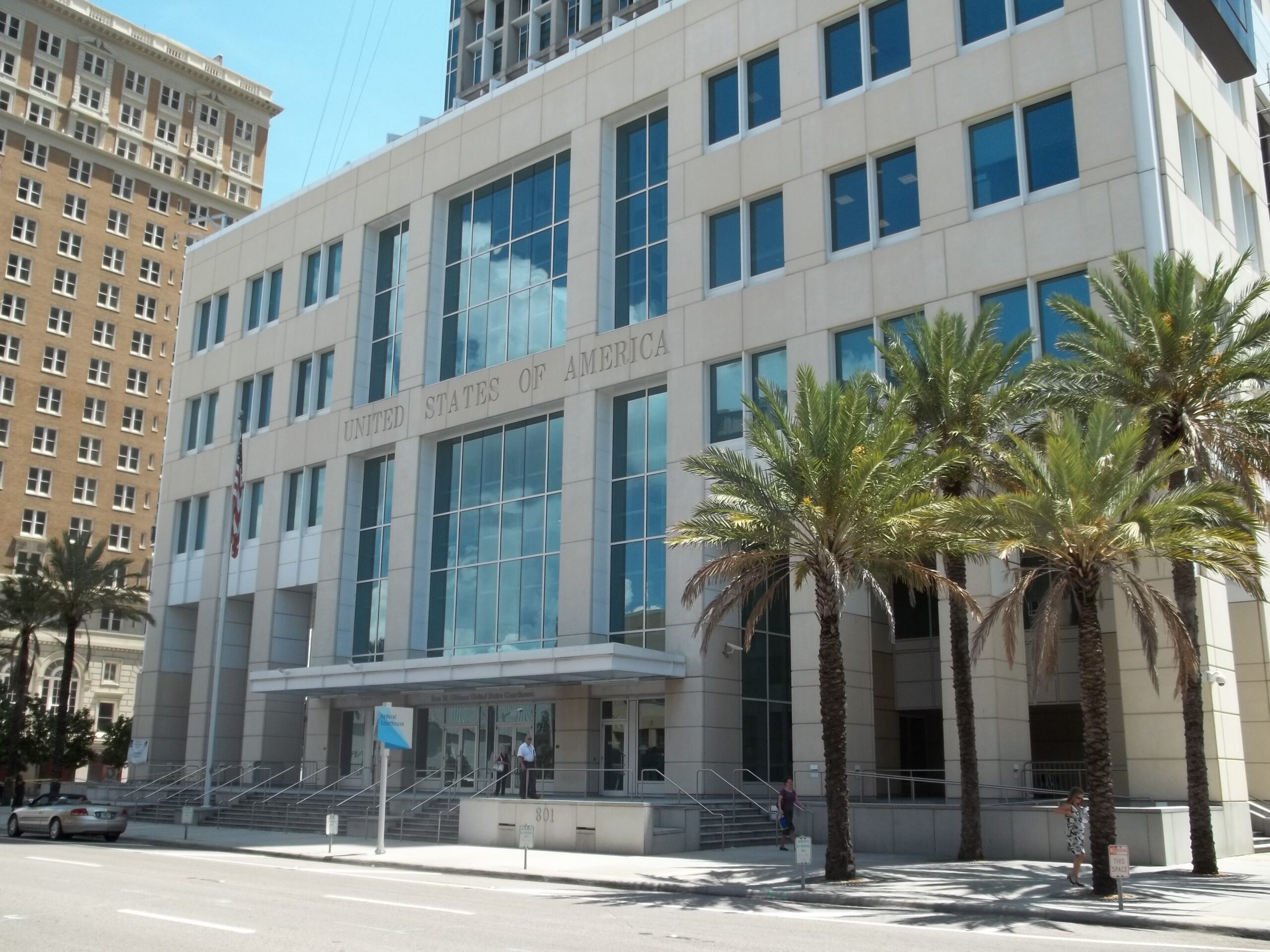
Image Attribution: “Sam M. Gibbons United States Courthouse” by Ebyabe, via Wikimedia Commons, licensed under CC BY-SA 3.0.