


The U.S. Food and Drug Administration (FDA) reported in a March 3, 2026, press announcement that telehealth companies received warning letters for marketing compounded GLP-1 drugs with claims the agency described as false or misleading. This follows litigation involving Novo Nordisk and Eli Lilly, which have taken legal action related to compounded versions of GLP-1 drugs, raising compliance concerns for Med Spas and clinics offering weight-loss injections.
FDA and Drugmakers Escalate Enforcement Around GLP-1 Compounding
On March 3, 2026, the FDA sent 30 warning letters to telehealth companies over marketing practices involving compounded GLP-1 drugs. The action follows the FDA’s February 6, 2026, announcement that it intends to take enforcement action against non-FDA-approved GLP-1 drugs, Novo Nordisk’s filing of a patent infringement lawsuit against telehealth provider Hims & Hers, and Eli Lilly’s April 23, 2025, lawsuits filed against several telehealth companies that allegedly sell unapproved compounded versions of tirzepatide. The developments signal increasing regulatory and legal scrutiny for clinics, telehealth providers, and Med Spas offering GLP-1 weight-loss injections.
FDA Targets Telehealth Marketing of Compounded GLP-1 Drugs
In a March 3, 2026, news release, the FDA warning letters cited promotional claims suggesting compounded GLP-1 drugs were equivalent to FDA-approved medications. FDA Commissioner Martin A. Makary, M.D., M.P.H., said compounded drugs are important for overcoming shortages or in unique needs for certain patients, and warned that companies attempting to circumvent the drug approval process could face enforcement action.
On February 9th, 2026, Novo Nordisk filed a patent infringement lawsuit against telehealth provider Hims & Hers, alleging the company marketed compounded semaglutide products that infringe on its intellectual property rights. In previous enforcement efforts on September 9, 2025, the FDA issued warning letters to online sellers advertising compounded versions of GLP-1 drugs, citing misleading direct-to-consumer advertising. Additionally, back in April 2025, Eli Lilly filed lawsuits in California against several telehealth companies, alleging they sold unapproved compounded tirzepatide, an active ingredient found in their drugs, Mounjaro and Zepbound.
The warnings and legal actions may have implications for Med Spas, and letters issued by the FDA enforce the provisions of the Federal Food, Drug, and Cosmetic Act. For clinics offering Med Spa telehealth services, including GLP-1, reviewing marketing and sourcing practices may help ensure compliance, as the FDA has stated that companies promoting misleading compounded GLP-1 products may be subject to enforcement actions such as product seizure or injunction.
Source Attribution: FDA News Release
According to a March 3, 2026, news release announcement, the FDA said it sent warning letters to 30 telehealth companies over allegedly false or misleading claims related to compounded GLP-1 products promoted on their websites.
Regulatory Focus on Compounded GLP-1 Distribution
In the FDA’s February 9, 2026 announcement, the agency emphasized that the concern with compounded GLP-1 drugs is that they are not reviewed or approved by the FDA for safety, effectiveness, or quality before being released into the market. The FDA targets marketing claims that portray compounded drugs as generic or identical alternatives to FDA-approved medications. On March 3, 2026, the FDA announced the start of oversight and enforcement actions, issuing 30 warning letters to involved telehealth companies.
This enforcement and regulatory focus places the greatest scrutiny on companies whose business models utilize direct-to-consumer promotion of compounded GLP-1 products, particularly through telehealth platforms, online advertising, and subscription-based weight-loss programs. Companies that promote compounded GLP-1 drugs directly to consumers through telehealth platforms and online advertising may face increased regulatory scrutiny.
Practical Implications for Med Spas Offering GLP-1 Treatments Through Telehealth
- Review your clinic’s marketing language: Ensure your website, telehealth operations, and social media accounts do not describe or present compounded GLP-1 drugs as generic alternatives.
- Confirm clear disclosure of the compounding pharmacy: The compounding pharmacy responsible for producing the GLP-1 medications given should be disclosed on telehealth intake pages, in patient communications, and in any promotional materials.
- Audit your telehealth weight-loss advertising: Review and ensure the claims do not imply FDA approval or claim an identical active ingredient to that of approved GLP-1 drugs.
- Verify your practice’s telehealth prescribing workflow: Ensure GLP-1 prescriptions are issued at your practice by licensed providers and follow documentation needs for patient evaluations.
- Maintain telehealth consent and disclosure forms: Explain the aspects of the compounded GLP-1 medication and that it is not an FDA-approved drug and has not been reviewed for safety, effectiveness, or quality.
What to Watch Next
The FDA is continuing to review telehealth marketing practices and aspects of compounded GLP-1s, such as drug distribution, as enforcement efforts develop. Any additional warning letters, litigation findings, and agency guidance may further inform how clinics, telehealth providers, and Med Spas structure GLP-1 treatment programs.
About Spakinect
Spakinect provides compliance infrastructure and telehealth-supported supervision solutions for medical aesthetic practices. For additional information, see our main page.
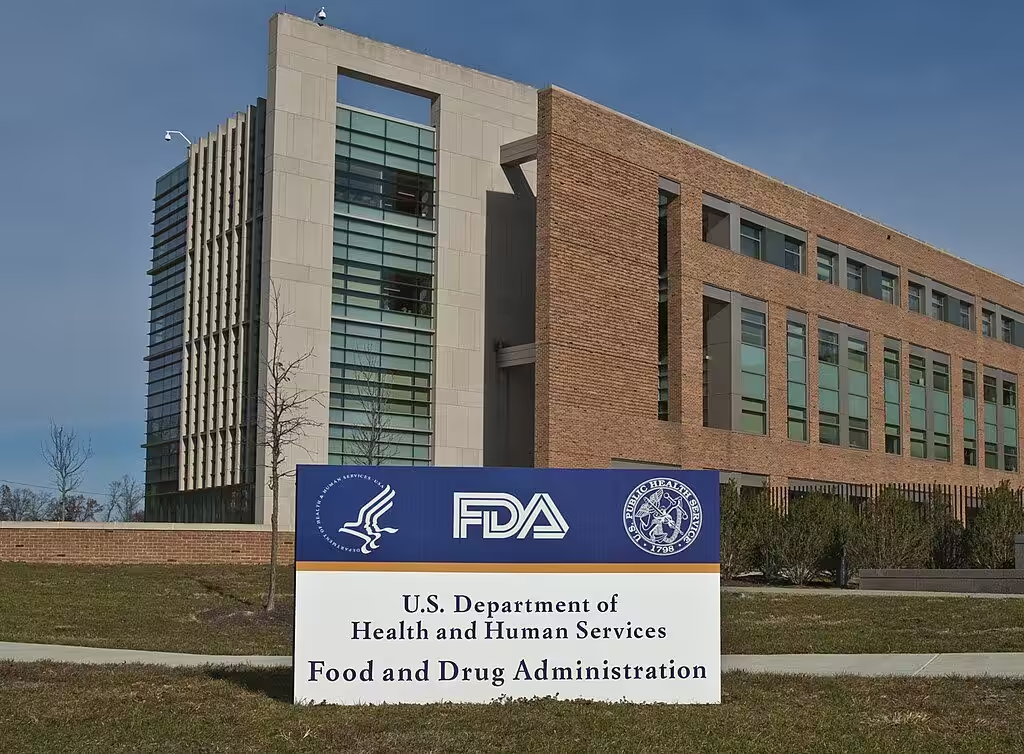
Image Attribution: “FDA Sign & Bldg 21 at Entrance” by The U.S. Food and Drug Administration, via Wikimedia Commons, public domain.