

An OSBN Spring 2026 Sentinel article describes APRN complaint cases involving menu-based IV services, aesthetic procedures, and documentation gaps. The guidance also addresses delegation, additives, and emergency preparedness.
OSBN Reviews APRN Complaints Involving IV Hydration and Aesthetic Services
On May 12, 2026, the Oregon State Board of Nursing released the Spring 2026 issue of Sentinel, including an APRN-focused article by OSBN Policy Analyst Sarah Wickenhagen on IV hydration and aesthetic practice concerns. The article describes complaint cases tied to menu-based IV therapy, delegation, documentation, additives, and emergency preparedness, providing compliance context for Oregon APRN-owned and operated Med Spa models.
Sentinel Article Details APRN Complaint Cases in IV Hydration and Aesthetic Practice
OSBN Policy Analyst Sarah Wickenhagen presented four case examples in the article involving APRN practice in IV hydration and aesthetic settings. The cases address service selection, delegation, business preparation, and structured clinical practice.
IV Therapy Service
The first case involves a client selecting a “hydration and immunity cocktail” from an IV therapy menu. Wickenhagen stated that the APRN reviewed a brief intake form but did not complete a comprehensive assessment before the infusion was administered with added vitamins and electrolytes.
Licensure and Delegation
In the second case, an APRN-owned Med Spa offering IV hydration and cosmetic injections relied on both licensed and unlicensed employees to perform treatment interventions. This case addresses whether assigned tasks match the team member’s license, certification, organizational role, and required supervision.
Business Operations and Provider Insurance
The third case describes an APRN who opened a cash-pay IV hydration and aesthetic business marketed as wellness-focused and low-risk. After a patient experienced an adverse reaction following an infusion, the APRN learned that their professional liability coverage did not cover IV hydration or aesthetic procedures.
Aligned Practice Structure
In the fourth case, Wickenhagen described an APRN who used a structured IV hydration model that aligned with regulatory requirements and professional standards. The example included a medical history review, medication review, contraindication screening, documented clinical rationale, informed consent, follow-up planning, and communication with other providers when indicated.
For APRN-owned and operated Med Spa models, the case examples connect IV hydration and aesthetic services with provider-directed treatment decisions, Oregon scope standards, business readiness, insurance review, and accurate representation of services.
OSBN Sentinel Article Cites Oregon APRN Practice Standards
According to the Oregon State Board of Nursing’s Spring 2026 issue of Sentinel, released on May 12, 2026, OSBN Policy Analyst Sarah Wickenhagen, DNP, APRN, FNP-C, wrote “Emerging Complaints: IV Hydration and Aesthetic Practices in APRN Regulation.” The article states that complaints to boards of nursing are increasing and discusses them through Oregon’s APRN regulatory lens, citing concerns highlighted by the North Carolina Board of Nursing and Board of Pharmacy.
APRN Guidance Highlights Scope, Documentation, and IV Therapy Oversight
The Sentinel article places the exampled case studies within Oregon’s existing APRN practice standards. Wickenhagen states that APRNs are independent practitioners in Oregon, but must practice within Divisions 45 and 55 of the Oregon Nurse Practice Act. The article also references Oregon Board of Pharmacy requirements, Oregon Health Licensing Office considerations, FDA guidance, and national disciplinary trends via the NCSBN.
Key article highlights include several practice concerns for APRNs in IV hydration and aesthetic settings:
- Patient-selected IV service menus without individualized provider assessment
- Additives, vitamins, minerals, or fluids without adequate verification, clinical support, or pharmacy compliance review
- Tasks assigned to employees without an appropriate license, certification, role, supervision, or scope
- Business operations that move ahead without appropriate coverage, registration, or representation review
- Clinical records that do not show assessment, informed consent, follow-up, or coordination with other providers when indicated
For Med Spa operators, the Oregon guidance is most applicable when APRNs own and operate services such as IV hydration, cosmetic injections, or related aesthetic treatments. The article’s focus also aligns with broader APRN and IV therapy oversight topics reviewed in the NCSBN APRN Roundtable on Texas Med Spa scope and IV therapy, as well as the Georgia Medical Board’s IV hydration guidance for APP oversight.
Practical Implications for APRN-Owned and Operated Med Spa Models
- Document the APRN assessment, clinical rationale, orders, consent, treatment, response, and follow-up.
- Determine treatment decisions through individualized APRN assessment and documented clinical judgment.
- Verify IV fluids, vitamins, minerals, and additives before use.
- Confirm pharmacy and federal requirements for IV products and additives.
- Assign tasks according to license, certification, role, supervision, and scope.
- Review business registration, coverage, advertising titles, and service descriptions.
- Maintain emergency procedures for IV hydration and aesthetic services.
What to Watch Next
As stated in the article, complaints to boards of nursing are increasing, and this article discusses those complaints through Oregon’s APRN regulatory lens. Future IV therapy and APRN scope updates may provide additional guidance for Med Spa operators and APRNs offering IV hydration or aesthetic services.
About Spakinect
Spakinect provides compliance infrastructure and telehealth-supported supervision solutions for medical aesthetic practices. For additional information, see our website.
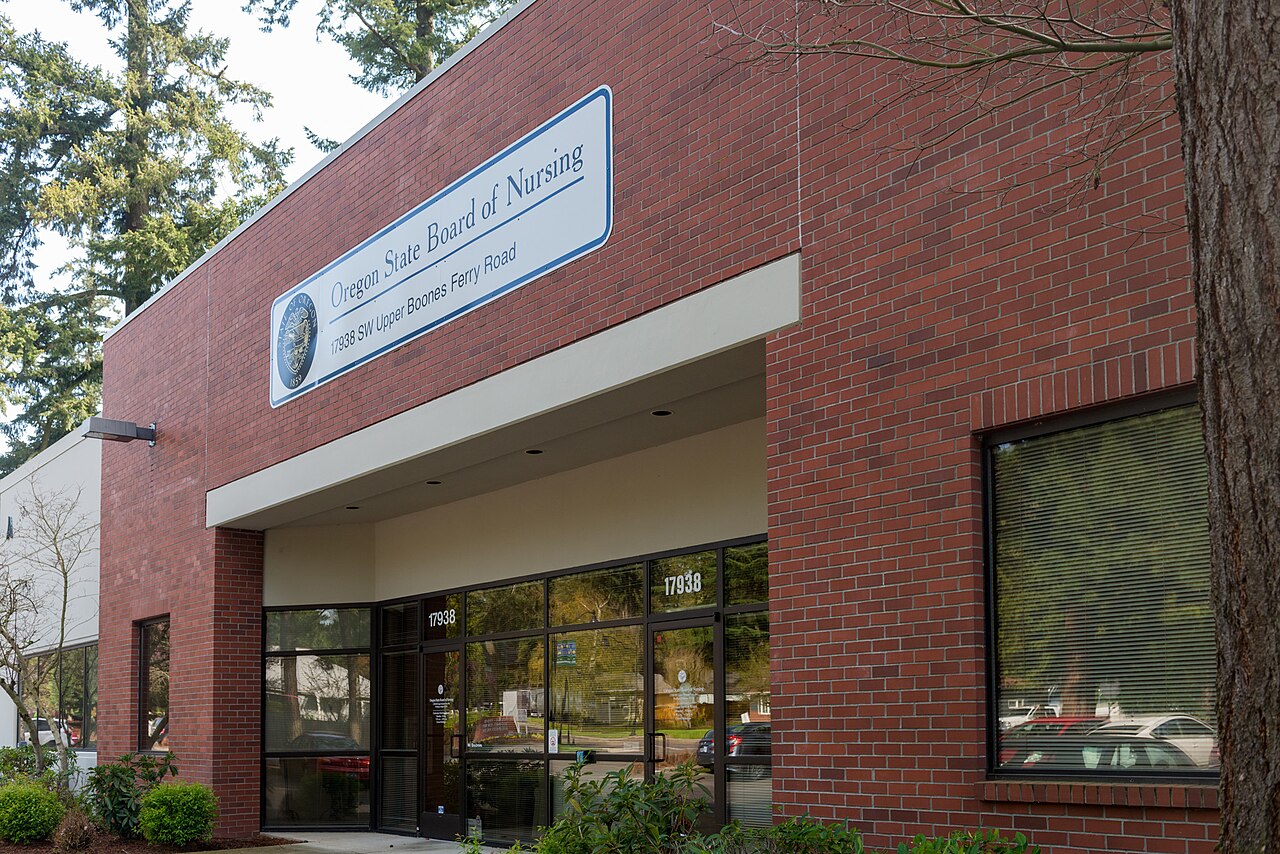
Image Attribution: “Oregon State Board of Nursing Office, Portland” by Oregon State Archives, via Wikimedia Commons, licensed under CC BY 4.0.