A newly published review examines facial vascular mapping, real-time imaging, training considerations, and emerging applications of artificial intelligence for hyaluronic acid filler and botulinum toxin procedures.
Emerging Technologies in Aesthetic Medicine
IntechOpen published a book chapter on July 10, 2026, reviewing the use of ultrasound-guided hyaluronic acid filler and botulinum toxin injections in aesthetic medicine. The publication reviews the clinical use of ultrasound in cosmetic injectable procedures, including patient assessment, procedural guidance, complication management, and emerging technologies. As an industry publication, the review may be relevant to Med Spa operators and licensed practitioners who perform cosmetic injectable procedures.
Ultrasound Guidance, Artificial Intelligence, and Cosmetic Injectable Procedures
Published in Advanced Techniques and Emerging Technologies in Cosmetic Surgery, the chapter examines recent developments in ultrasound-guided cosmetic injectable procedures. The authors review current applications of ultrasound imaging for hyaluronic acid fillers and botulinum toxin and describe a shift from relying on generalized anatomical landmarks to real-time visualization of each patient’s facial anatomy. The review also explores how ultrasound is being incorporated into treatment planning, procedural guidance, and post-procedure evaluation to visualize soft tissues, blood vessels, muscles, and previously placed filler.
Key topics discussed include:
- Facial vascular mapping: Doppler ultrasound is presented as a method for identifying blood vessels and recognizing patient-specific anatomical variations before treatment.
- Image-guided procedures: Real-time imaging is discussed for visualizing tissue planes, needle or cannula position, and filler placement during cosmetic injectable procedures.
- Botulinum toxin applications: Ultrasound is described for localizing targeted muscles in treatment areas where anatomy may be more complex.
- Post-treatment evaluation: Imaging is discussed for assessing filler location and evaluating findings such as nodules, hematomas, vascular compression, and inflammatory changes.
- Technology advancements: The review highlights ergonomic developments, including fingertip-mounted ultrasound probes designed to support simultaneous imaging and injection.
- Artificial intelligence: Emerging technologies are discussed for applications such as tissue segmentation, facial vessel identification, instrument tracking, and enhanced ultrasound image interpretation.
The authors also discuss the growing availability of ultrasound education and training in aesthetic medicine. Training topics include facial ultrasound, Doppler image interpretation, and image-guided injection techniques. The review further examines how advances in artificial intelligence may support ultrasound image interpretation and integration into clinical workflows as these technologies continue to develop.
Source Publication
According to the July 10, 2026, IntechOpen book chapter Ultrasound-Guided Hyaluronic Acid Filler and Botulinum Toxin Injections: Principles, Clinical Applications, Ergonomic Innovations, and Artificial Intelligence Integration, the authors review ultrasound-guided hyaluronic acid filler and botulinum toxin procedures in aesthetic medicine.
Compliance and Educational Context for Med Spa Operators
Artificial intelligence-supported ultrasound features are described as tools that assist with tissue segmentation, facial vessel identification, instrument tracking, and image interpretation during cosmetic injectable procedures. The publication explains that these technologies are intended to support image analysis and procedural workflows while maintaining the role of practitioner expertise, anatomical knowledge, and clinical judgment in patient assessment and treatment decisions.
Ultrasound guidance is discussed alongside facial anatomy education, vascular mapping, and complication assessment in aesthetic medicine. The authority to perform cosmetic injectable procedures continues to be determined by state law. Requirements governing practitioner licensure, scope of practice, supervision, delegation, and competency vary across jurisdictions and may differ by profession.
Recent regulatory developments reflect this state-specific approach. For example, Connecticut enacted legislation addressing dentists’ authority to perform cosmetic botulinum toxin and dermal filler procedures, while the Oklahoma Board of Nursing issued guidance regarding cosmetic procedures performed by registered nurses. As imaging technologies continue to be incorporated into aesthetic medicine, existing regulatory frameworks remain applicable to the performance of cosmetic injectable procedures, practitioner qualifications, and clinical oversight.
Practical Industry Considerations for Med Spa Operators
- Confirm practitioner authority under applicable state licensure, scope of practice, supervision, and competency requirements.
- Recognize that ultrasound and artificial intelligence are described as adjunctive technologies that support, rather than replace, practitioner expertise and clinical judgment.
- Monitor state laws, board guidance, and regulatory developments affecting cosmetic injectable procedures.
- Verify that the use of adjunctive technologies complies with applicable state laws, regulations, and professional standards.
- Maintain competency and oversight requirements established by applicable laws and regulations.
- Review emerging industry publications and clinical literature describing ultrasound and artificial intelligence applications in aesthetic medicine.
What to Watch Next
Additional clinical publications and professional guidance may provide further information on ultrasound-guided cosmetic injectable procedures and artificial intelligence applications. Future guidance from state licensing boards and regulatory agencies may also provide additional context for the use of these technologies in aesthetic medicine.
About Spakinect
Spakinect provides compliance infrastructure and telehealth-supported supervision solutions for medical aesthetic practices. For additional information, see our website.
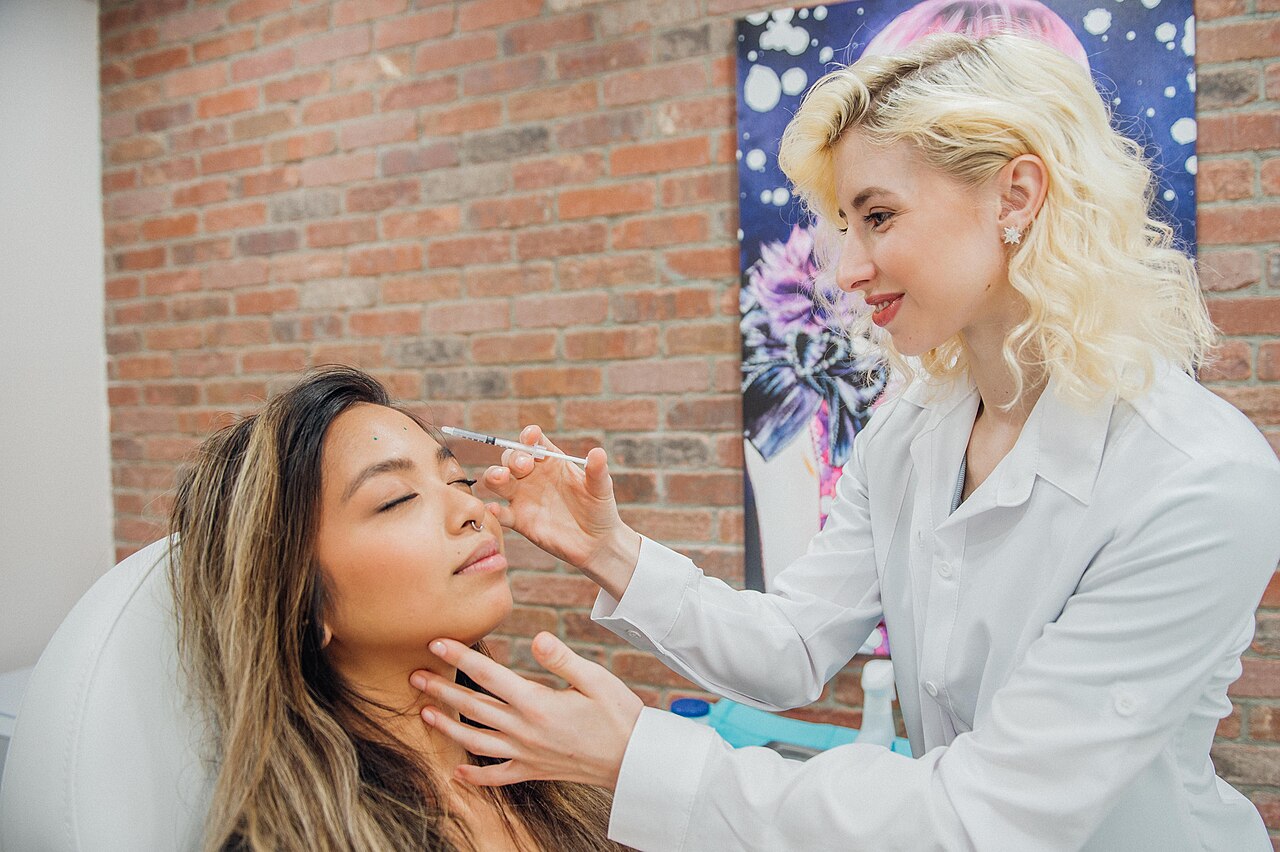
Image Attribution: “Doctor performing Botox injection” by D. Schwarzburg, via Wikimedia Commons, dedicated to the public domain under the CC0 1.0 Universal Public Domain Dedication.