

The FDA published 17 revised draft product-specific guidances (PSGs) in July 2026 covering peptide products including semaglutide, tirzepatide, and liraglutide, updating its recommendations for generic drug developers preparing abbreviated new drug applications (ANDAs).
FDA Details Updated Recommendations for Generic Peptide Drug Applications
On July 28, 2026, the FDA published 17 revised draft product-specific guidances (PSGs) for peptide drugs, including semaglutide, tirzepatide, and liraglutide. For Med Spa and wellness operators, the agency update provides context on FDA’s pathway for generic GLP-1 and other peptide drug development, while existing federal and state requirements for lawful prescribing, sourcing, and compounding remain applicable.
Revised PSGs Cover Semaglutide, Tirzepatide, and Other Peptide Drug Products
The FDA published 17 revised draft PSGs on July 28, 2026, covering peptide drug products used for obesity, type 2 diabetes, osteoporosis, macular degeneration, and other conditions. The group includes semaglutide, tirzepatide, and liraglutide products, along with several other peptide drugs. The updated documents provide recommendations for generic drug developers preparing ANDAs.
The revised PSGs address five areas involved in generic peptide drug development:
- Submission of recombinantly, synthetically, or semi-synthetically produced peptides through the ANDA pathway
- Innate immune response testing
- Impurity thresholds
- Higher-order structure assessment
- Biological activity assessment
Among the products addressed in the revised PSGs are:
- Ozempic and Wegovy containing semaglutide
- Mounjaro and Zepbound containing tirzepatide
- Victoza and Saxenda containing liraglutide
- Calcitonin salmon products
- Dasiglucagon hydrochloride
- Glucagon products
- Pegcetacoplan products
- Teriparatide products
- Vosoritide
The FDA uses PSGs to provide product-specific recommendations for developing and reviewing proposed generic drugs submitted through the ANDA process. The agency also withdrew its May 2021 guidance for industry, ANDAs for Certain Highly Purified Synthetic Peptide Drug Products That Refer to Listed Drugs of rDNA Origin.
In withdrawing the 2021 document, the agency noted that it no longer reflects FDA’s current scientific thinking and plans to revise the guidance later in 2026, as listed in the Center for Drug Evaluation and Research 2026 Guidance Agenda. As of this reporting, the 17 PSGs remain in draft form. Public comments are accepted through September 28, 2026, and the FDA will consider those submissions before issuing final guidance.
Source Attribution
According to the FDA’s July 28, 2026, Drug Alerts and Statements announcement and the related Federal Register notice, the agency published 17 revised draft PSGs for peptide drug products and opened a public comment period through September 28, 2026.
Industry and Compliance Considerations for GLP-1 and Other Peptide Drug Products
The revised PSGs are part of broader 2026 developments involving GLP-1 medications, other peptide drug products, generic drug development, compounding, and access to FDA-approved treatments. The July action focuses on the ANDA pathway for proposed generic peptide drugs and aligns with the FDA’s Drug Competition Action Plan. Publication of the draft PSGs does not itself constitute approval of a generic drug.
Other developments have involved access to FDA-approved GLP-1 medications. A March 2026 agreement between Novo Nordisk and Hims & Hers provided for Ozempic and Wegovy to be offered through the telehealth platform. The Medicare GLP-1 Bridge also began July 1, 2026, providing eligible beneficiaries access to certain FDA-approved weight-management medications.
Compounding and peptide sourcing remain separate areas of federal oversight. In March, the FDA issued warning letters to 30 telehealth companies involving claims for compounded GLP-1 products. July proceedings addressed seven peptide-related substances under consideration for the 503A Bulks List, while an April federal indictment involving a Utah physician alleged unlawful sourcing and sale of non-FDA-approved peptide products.
For Med Spa and weight-management providers, these developments involve distinct regulatory pathways for GLP-1 medications, other peptide drug products, generic drugs, compounded medications, and medication access. Existing federal and state requirements governing prescribing, practitioner authority, lawful drug sourcing, compounding, and product marketing remain applicable.
The revised PSGs address generic peptide drug development through the ANDA pathway. Separate federal and state requirements continue to govern prescribing, sourcing, compounding, and product marketing.
Practical Considerations for Med Spa Providers and Operators
- Track FDA updates on generic GLP-1 and other peptide drug developments.
- Review broader FDA actions involving GLP-1 medications, peptide compounding, and drug availability that may affect Med Spa and weight-management services.
- Differentiate FDA-approved drugs from compounded and non-FDA-approved products when reviewing product status and sourcing.
- Confirm drug suppliers, distributors, and pharmacies are appropriately authorized and operate through lawful sourcing and distribution channels.
- Ensure prescribing, sourcing, and product-marketing practices follow applicable federal and state requirements.
What to Watch Next
The FDA is accepting public comments on the revised PSGs through September 28, 2026, before issuing final guidances. The agency also plans to revise its withdrawn 2021 peptide guidance later in 2026. Future ANDA decisions may establish whether proposed generic GLP-1 and other peptide drug products receive FDA approval.
About Spakinect
Spakinect provides compliance infrastructure and telehealth-supported supervision solutions for medical aesthetic practices. For additional information, see our website.
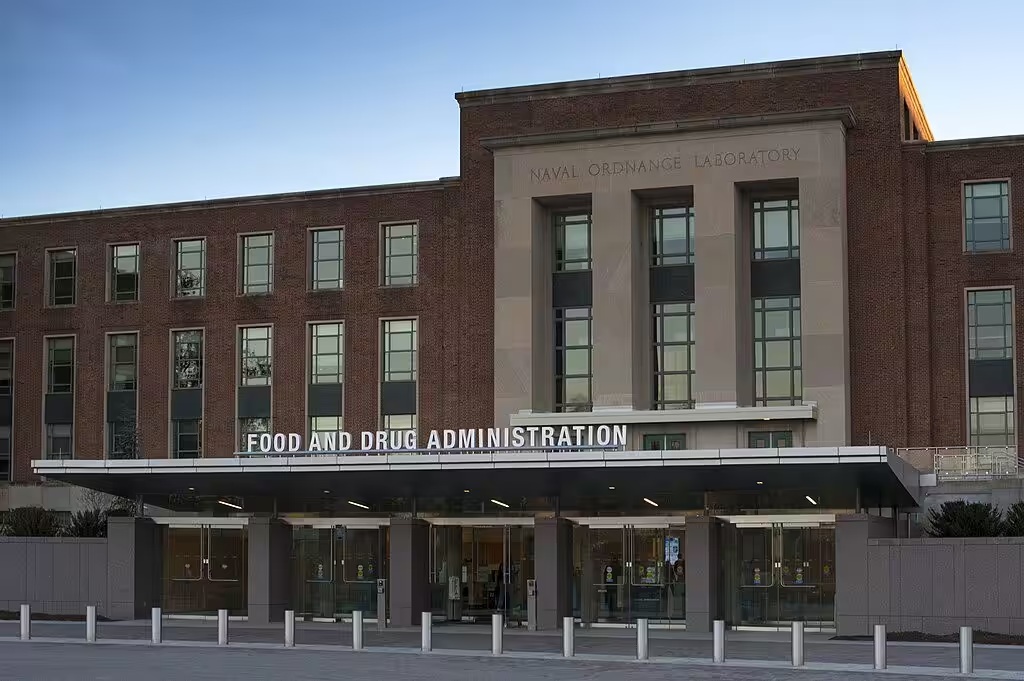
Image Attribution: “FDA Entrance” by The U.S. Food and Drug Administration, via Wikimedia Commons, public domain.