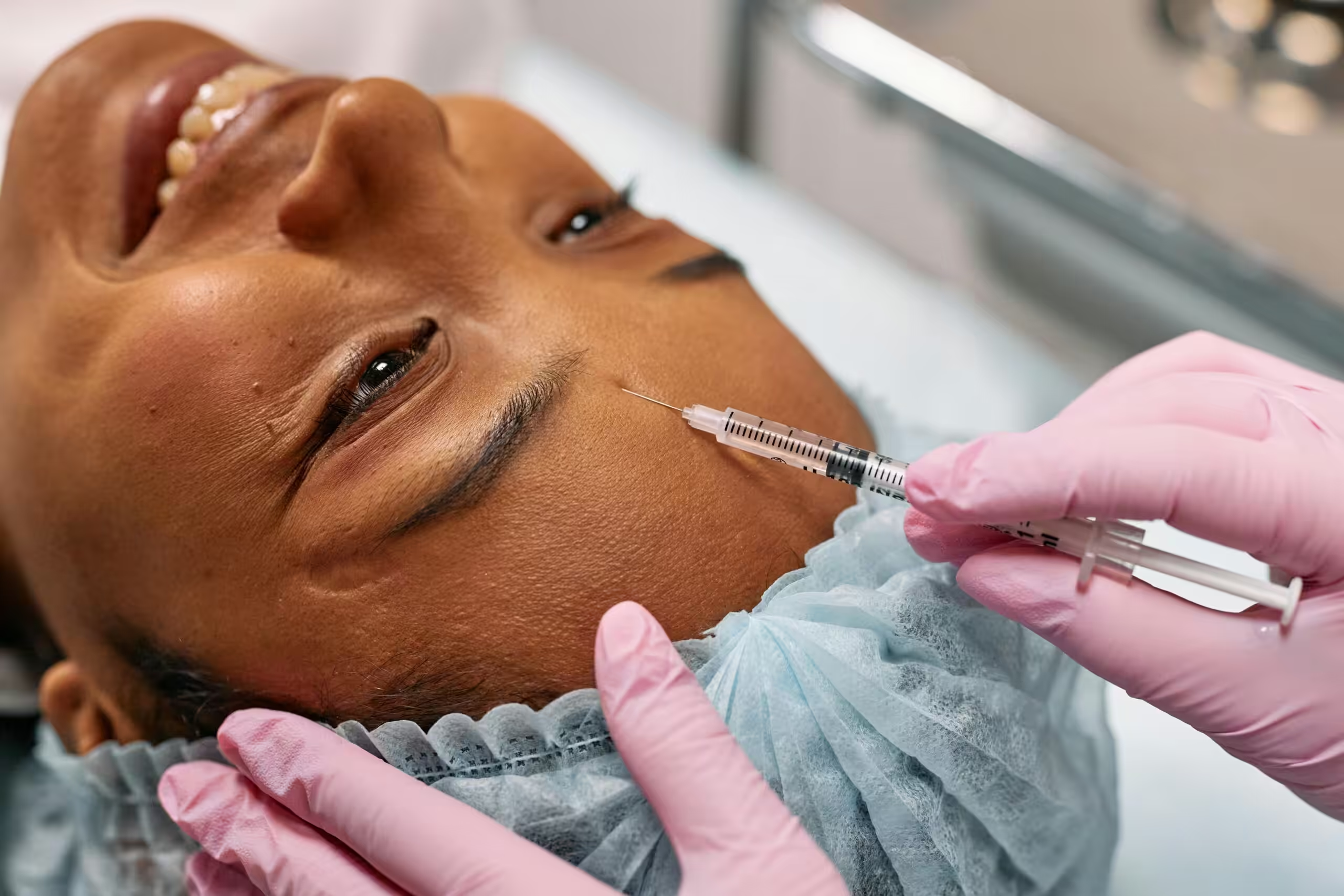
Botox is one of the most requested services in any Med Spa. It is fast, familiar, and often perceived as routine. From a regulatory standpoint, however, Botox is anything but simple.
Botox, along with other neuromodulators used in aesthetic medicine, is a prescription drug. That classification places it squarely under medical practice laws. Because of this, most Med Spas are legally required to ensure a Good Faith Exam is completed before Botox is administered.
This requirement exists to protect patient safety, establish proper medical oversight, and reduce liability for providers and practice owners.
If you need a foundational overview, start with What is a Good Faith Exam?
Why Botox Requires a Good Faith Exam
Botox and other neuromodulators require a prescription and medical authorization. Any time a prescription product is used, state Medical Boards expect a licensed provider to evaluate the patient and determine whether treatment is medically appropriate.
A Good Faith Exam establishes:
- A formal provider patient relationship
- Medical clearance based on health history and current status
- Informed consent grounded in clinical judgment
- Documentation that supports compliance and liability protection
Without this exam, administering Botox may be viewed as unlicensed practice of medicine, even if the injection itself is technically flawless.
For a broader explanation of why this matters in Med Spas, see Why is a Good Faith Exam required in med spas?
Is a Good Faith Exam Required for Botox in Every State?
While the exact language varies by jurisdiction, all states require a Good Faith Exam before Botox, either explicitly or through general medical practice and prescribing laws.
Some states clearly define the requirement. Others do not use the term “Good Faith Exam” but still require a documented medical evaluation before neuromodulators are prescribed or administered.
In enforcement actions, boards consistently treat Botox and similar neuromodulators as medical treatments that require prior provider evaluation.
If you operate across multiple locations or want clarity by jurisdiction, see Do laws around GFEs differ by state? and What are the compliance laws in my state for a med spa?
Who Can Perform the Good Faith Exam for Botox?
Only licensed providers with appropriate scope of practice can perform a Good Faith Exam for Botox and other neuromodulators. This generally includes:
- Physicians
- Nurse Practitioners, subject to state law
- Physician Assistants, under required supervision
Registered Nurses, Medical Assistants, and estheticians cannot perform the exam, even if they are permitted to inject Botox under delegation.
Improper delegation is one of the most common compliance failures in Med Spas.
For more detail, see:
Does a Virtual Good Faith Exam Count for Botox?
In most states, yes. A virtual Good Faith Exam conducted via synchronous telehealth is legally acceptable for Botox and other neuromodulators when done correctly.
The exam must include:
- Live interaction between patient and provider
- Review of full medical history and contraindications
- Medical decision making documented by the provider
- Treatment authorization prior to injection
States that restrict asynchronous exams still allow live video encounters.
For more on this distinction, see:
What a Botox Good Faith Exam Should Evaluate
A Good Faith Exam for Botox is not a superficial screening. The provider must assess the patient’s full medical history and current health status with neuromodulator safety in mind.
This typically includes:
- Neuromuscular conditions
- Pregnancy or breastfeeding status
- Current medications and interactions
- Prior reactions to Botox or similar neuromodulators
- Treatment goals and expectations
The provider then determines whether the patient is a safe candidate and documents that decision.
For a deeper comparison, see How is a GFE different from a regular medical exam?
Does One Good Faith Exam Cover Botox and Other Treatments?
It can, depending on how the exam is structured and documented.
A single Good Faith Exam may cover Botox and additional services if:
- Each treatment is evaluated for safety
- Medical clearance is documented for each service
- No contraindications are present
This often applies when patients want Botox alongside fillers, lasers, or other medical aesthetic treatments.
For details, see:
What If the Patient Has Had Botox Before?
Previous Botox treatments do not automatically eliminate the need for a Good Faith Exam.
A new exam may be required if:
- The patient is new to your Med Spa
- The prior exam is outside your state’s renewal window
- The patient’s health history has changed
Continuing treatment without proper reassessment increases compliance risk.
For more guidance, see:
What If the Patient’s Health Changes?
Any changes in a patient’s medical history may require a new or updated Good Faith Exam before Botox is administered again.
Examples include:
- New medications
- New diagnoses
- Pregnancy
- New neuromuscular symptoms
Treating without reassessment can invalidate the original exam.
Learn more in What happens if a patient’s health changes between GFEs?
The Risk of Skipping a Good Faith Exam for Botox
Skipping a Good Faith Exam often feels low risk until a complaint, audit, or adverse reaction occurs.
When documentation is missing, boards focus first on whether a proper exam was completed.
Consequences may include:
- Significant financial penalties
- Scrutiny of the Medical Director
- Loss of delegation authority
- Increased malpractice exposure
For more on consequences, see What happens if I don’t perform a GFE?
How Spakinect Supports Botox and Neuromodulator Compliance
Spakinect was built to support Med Spas offering Botox and other neuromodulators at scale, without sacrificing compliance.
- Patients connect with a licensed provider in an average of 31 seconds
- All exams are performed by licensed W-2 providers
- Providers receive over 40 hours of dedicated training
- Processes are Medical Board vetted
- Documentation is securely stored and integrates with most EMRs
- Coverage spans 40 states and counting, supporting single and multi location Med Spas
To confirm availability, visit States We Service.
FAQs: Botox and Good Faith Exams
Which states legally require a Good Faith Exam before Botox?
Most states require a medical evaluation before Botox through either explicit Good Faith Exam rules or broader medical practice laws. Enforcement outcomes are consistent even where terminology differs.
Who is qualified to perform a Good Faith Exam for injectables?
Only licensed physicians, nurse practitioners, and physician assistants may perform Good Faith Exams for Botox, subject to state scope and supervision rules.
What components are included in a Good Faith Exam for Botox?
A complete exam includes review of medical history, medications, contraindications, provider assessment, and documented medical clearance.
Can a telemedicine Good Faith Exam be used for Botox treatments?
Yes, in most states, when conducted synchronously and documented properly.
How often do I need a new Good Faith Exam for repeat Botox sessions?
A new exam may be required based on state renewal timelines or changes in patient health.
Final Takeaway
If your Med Spa offers Botox, a Good Faith Exam is not optional. It is a foundational requirement that protects patients, providers, and the business.
When handled correctly, it strengthens trust and reduces risk without slowing operations.
Spakinect makes Botox compliance seamless by connecting patients to licensed providers in seconds and ensuring every exam meets the highest regulatory standard.
When done correctly, it protects patients, providers, and the business itself. It also reinforces the professionalism and credibility of your practice.
Spakinect makes Botox and neuromodulator compliance seamless by connecting patients to licensed providers in seconds and ensuring every exam meets the highest regulatory standard.